WHO SEARO PSI Statement at WHO-SEARO Calls for Decent Work for Primary Health Care Workers
At the 78th Session of the WHO South-East Asia Regional Committee in Colombo, PSI Asia Pacific Executive Committee member Samudra Gunawardana delivered a joint statement on behalf of PSI and the UN University International Institute of Global Health (UNU-IIGH), urging governments to strengthen primary health care (PHC) systems by ensuring decent work and fair conditions for frontline health workers.

Jyotsna Singh
During the annual meeting of the WHO South-East Asia Regional Organisation (WHO-SEARO) held this week in Colombo, Sri Lanka, PSI and UNU-IIGH submitted a joint statement. The statement—delivered by Samudra Gunawardena, representing PSI affiliate Public Services United Nurses’ Union (PSUNU) and a member of PSI’s Asia Pacific Regional Executive Committee (APREC)—was presented under the agenda item reviewing progress on the Delhi Declaration on Strengthening Primary Health Care as a Key Element Towards Achieving Universal Health Coverage.
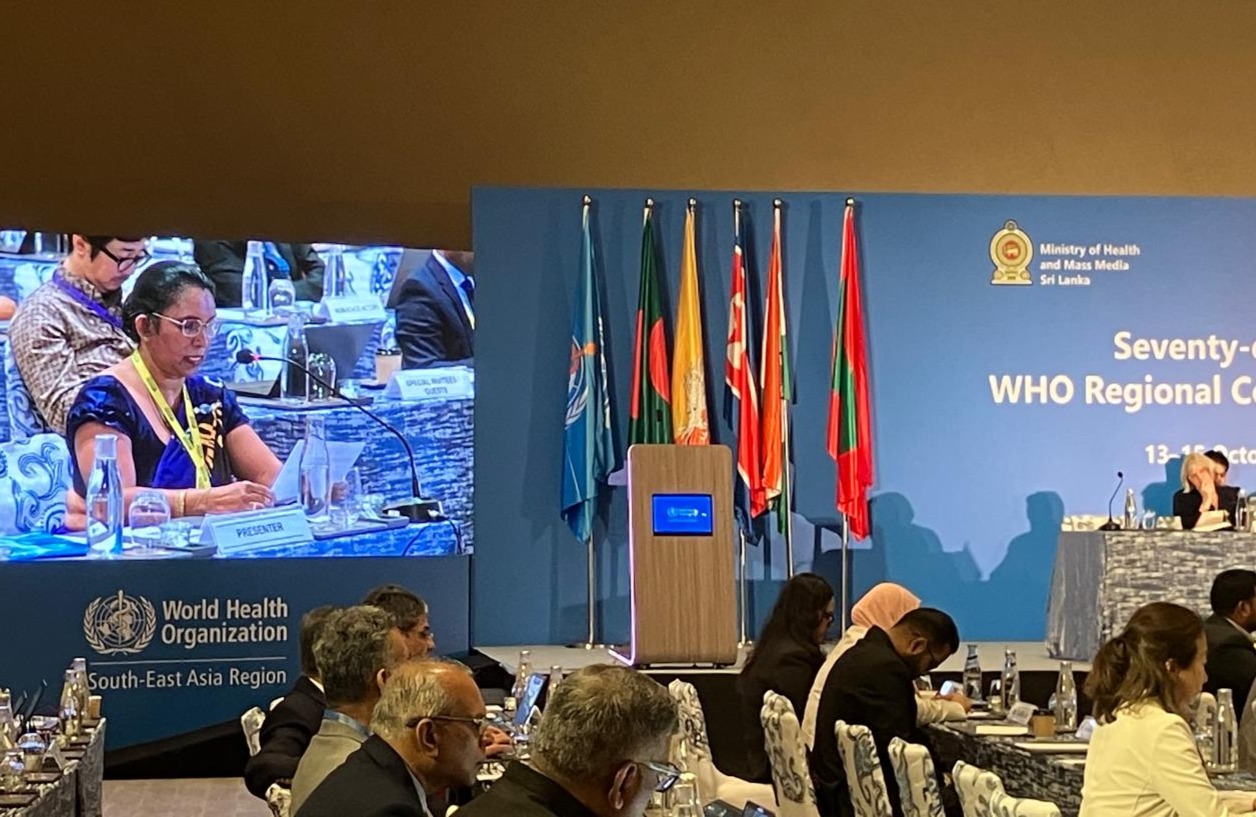
The statement highlighted that universal health coverage cannot be achieved without recognising and investing in the people who make health systems work — the Primary Health Care (PHC) workforce. It urged member states to prioritise the rights, safety, and working conditions of PHC workers, including ensuring fair wages, job security, and access to social protection. It reaffirmed PSI’s long-standing position that decent work is the foundation of resilient health systems and that governments must integrate labour rights into their health policy frameworks to deliver equitable, quality care for all.
statement
Honourable Delegates,
UNU-IIGH and PSI appreciate the opportunity to speak to Agenda Item 9.8. UNU-IIGH is a think-tank within the UN system working to advance equitable, just and effective global health policies and practices. PSI represents over 14 million health workers in 700 health and care sector unions worldwide.
Collectively, we support the objective of strengthening the region’s primary health care (PHC) and commitments to prioritise PHC in health budgets. However, a glaring omission concerns us. While the Declaration speaks of investing in the health workforce, it is silent on health workers fundamental rights, fair remuneration, and decent work conditions.
We cannot build resilient health systems without a respected health and care workforce, whose needs are secured. The PHC workforce, consisting primarily of women, is chronically understaffed, consistently denied their labour rights, and at heightened risk of gender-based violence, harassment and abuse. Community Health Workers, for instance, are a backbone of PHC but not formally recognised as workers. As such, they are denied minimum wages, job security, and social protection, despite delivering critical health services to the most marginalised communities. The Declaration’s statement on identifying “shared responsibilities among different cadres" can easily become a mandate for task-shifting to CHWs, without commensurate pay or rights. And digitalisation carries major risks if the well-being and rights of health workers are not centred. We therefore call for the recognition of all CHWs as public sector workers, inline with both the ILO normative standards and WHO guidelines.
We also recognise that the aggressive push by international financial institutions towards privatisation of healthcare and austerity measures are cutting public spending on the health workforce in our countries.
To conclude, we support the Declaration's goals, but we urge Member States to invest in fundamental rights of their health workforce if they want to strengthen PHC.