Labour mobility is a significant contributor to Pacific Islands’ economies, with remittances from workers migrating on a temporary basis and diaspora citizens making substantial contributions to the economy in some Pacific Island countries.
Australia and New Zealand’s managed temporary labour migration schemes for Pacific and Timor-Leste workers (the Pacific Australia Labour Mobility (PALM) scheme and the New Zealand Recognised Seasonal Employer (RSE scheme) have traditionally been aimed at filling lower-skilled, seasonal jobs in agriculture and related sectors. Since its inception, the Australian PALM scheme has expanded into more industries, including personal care work in aged care.
This report outlines how health unions and others in Pacific Island nations have ongoing concerns that labour migration from the Pacific Island countries to Australia and New Zealand is undermining health systems that are already under significant pressure, through depleting skilled health care workforces in their countries. The unions demand their inclusion and social dialogue across Oceania to ensure labour rights and decent work.
Learn more
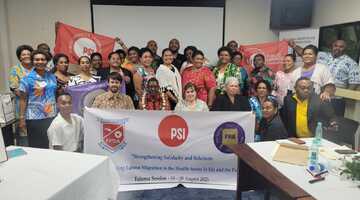
A new report from Public Services International (PSI) and the Centre for Future Work at The Australia Institute warns that unmanaged labour migration from Pacific Island nations to Australia and Aotearoa New Zealand is draining already fragile health systems and pushing the region towards a serious health workforce crisis.