ILO C190 Unions in Sri Lanka Win as ILO’s C190 is Ratified

Unions in Sri Lanka have secured a landmark win with the ratification of ILO Convention 190 (C190) on eliminating violence and harassment in the world of work. After years of organising, petitions, trainings, and policy advocacy, the labour movement has pushed C190 from promise to reality. Now they are turning to the next fight, i.e. implementation.

Jyotsna Singh
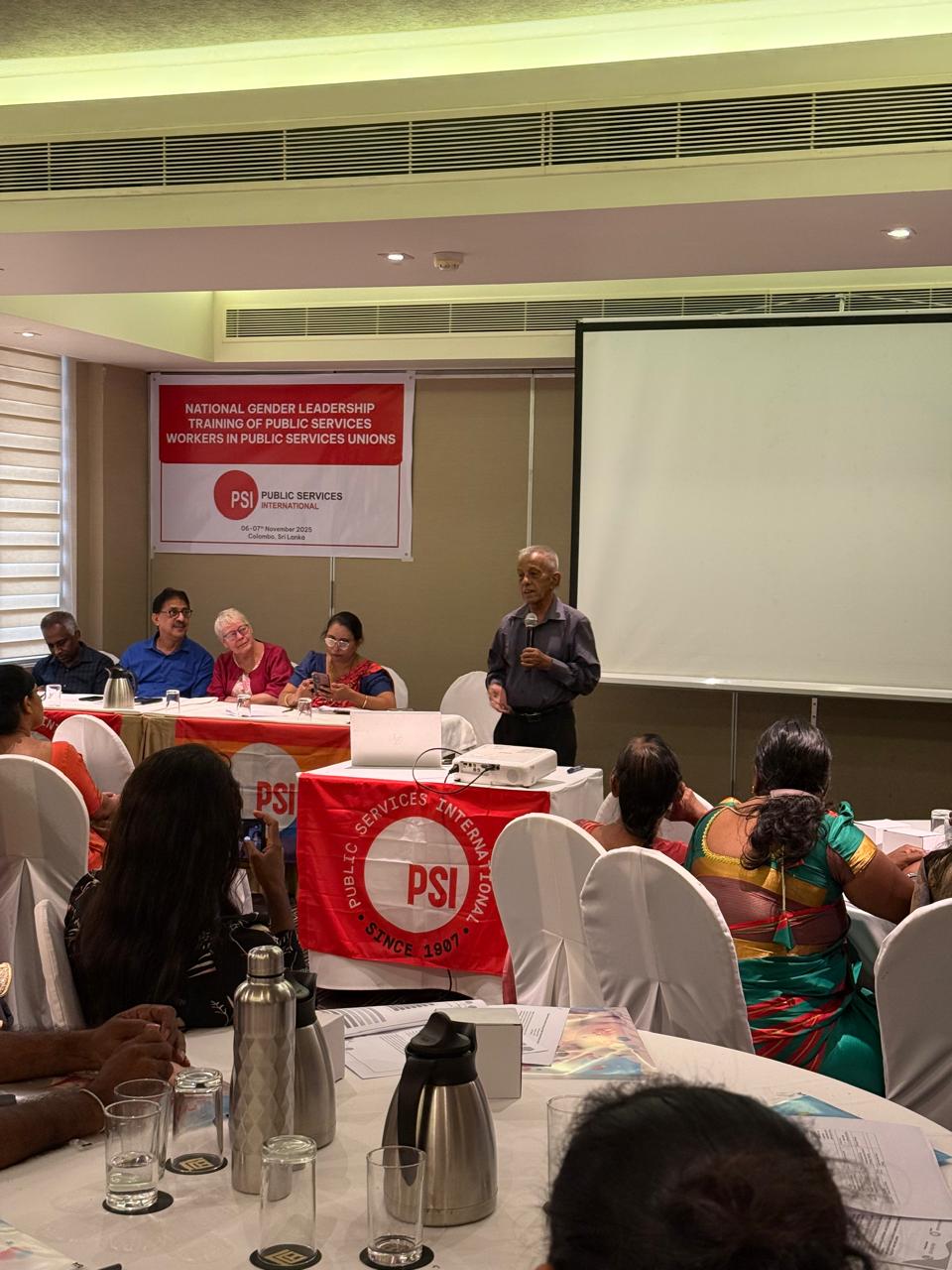
Unions in Sri Lanka have achieved a major victory with the ratification of the International Labour Organisation’s Convention 190 (C190) on eliminating violence and harassment in the world of work. PSI, PSI’s Women’s Committee, and the National Coordination Committee (NCC) of PSI affiliates have been at the forefront of the campaigning and advocacy that helped bring this long-pending commitment to completion.
“We did not receive this victory as a gift—we organised for it and fought for it. Despite getting assurances since 2020, the process was not finished. But we refused to let it slip off the national agenda, and now it has finally seen the light of day. Workers, especially women workers, kept raising voices until C190 was accepted. We will now work towards its implementation so that women can ultimately work with safety and dignity,” said Samudra Gunawardana, member of PSI’s Asia Pacific Regional Executive Committee (APREC) and member of Public Services United Nurses’ Union (PSUNU).
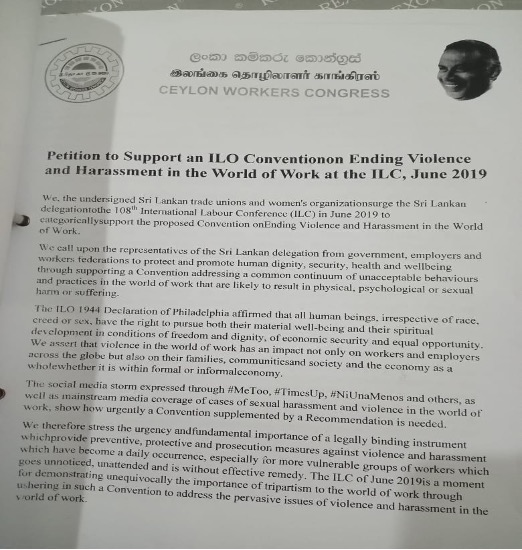
The Ceylon Workers Congress (CWC) played a key role in the campaign and mobilisation for C190. It launched a petition to collect workers’ signatures, demonstrating broad support for ratification. The petition gathered more than 10,000 signatures and became a major milestone in the advocacy effort that helped secure ratification.
Samudra Gunawardana Public Services United Nurses’ Union (PSUNU)
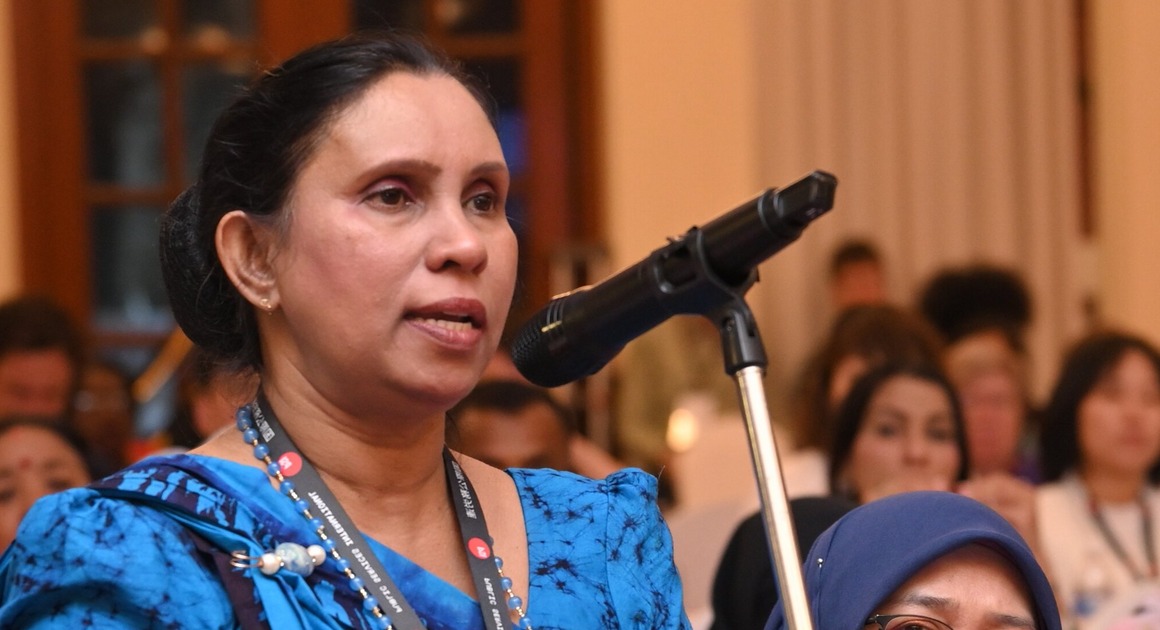
Workers, especially women workers, kept raising voices until C190 was accepted. We will now work towards its implementation
To sustain pressure and coordinated action, unions formed the Sri Lanka Trade Union Movement for the Ratification of ILO C190. PSI and its affiliates played an important role in strengthening this movement. In the process, many women trade unionists emerged as leaders. They became trainers and public voices—taking C190 into workplaces, public forums, and the media, and ensuring that gender justice remained central to the campaign.
Adopted by the ILO in 2019, C190 is the first international treaty to address violence and harassment, including gender-based violence and harassment (GBVH), in the world of work. With collaboration and support from the Solidarity Centre, the ILO, and relevant government officials, Sri Lankan unions conducted awareness campaigns, policy dialogues, and workshops to underscore why C190 is essential for safe and respectful workplaces. These engagements spread awareness among workers, unions, government officials, and Parliamentarians, steadily building consensus and political momentum.
Since 2019, unions—working collectively through tripartite processes and broader solidarity networks—kept up the pressure. Around 20 to 30 unions participated in training programmes, awareness drives, and advocacy with decision-makers. The work engaged the National Labour Advisory Council (NLAC), Sri Lanka’s key tripartite body for discussing labour policy, which brings together the government, employers, and workers’ representatives.
Unions repeatedly emphasised two core messages. First, C190 matters because it highlights benefits for workers, employers, and government alike—setting clear standards for respectful workplaces and supporting national economic and social development. Second, unions argued for building inclusive and resilient workplaces that protect all categories of workers, from senior staff to entry-level employees, and from formal to informal work settings.
For unions, the connection between workers’ rights and national development is direct. A country’s economic and social progress depends on its workforce. Ensuring dignity, health, safety, and rights at work strengthens productivity, social stability, and democratic participation. Unions maintained that this broader understanding is essential because it places gender justice at the heart of development and social progress.
This struggle was never abstract. Sri Lanka’s labour force is structured in a way that leaves a large share of workers outside formal protections, with around 60–70% in informal work. Women make up a significant proportion of workers in sectors such as garments and overseas domestic work—settings where power imbalances and unsafe conditions can heighten exposure to violence, harassment, and discrimination.
Unions and labour rights activists submitted petitions urging ratification and held sustained discussions with successive ministers in the government, insisting that a change of portfolio must not mean a change of priorities. Alongside this advocacy, unions contributed to drafting legal reforms aligned with C190 and undertook gap analyses focusing on gender-related issues that would need to be addressed for implementation to be meaningful.
On 17 October 2025, the ILO, the Ministry of Labour, and NLAC-affiliated unions held a special session on C190, organised by the Ministry of Labour. This was an important step in renewing coordination and commitment among stakeholders and helped translate years of organising into final political acceptance.
“It is a significant victory for the unions in Sri Lanka. Now the work must move decisively into implementation. Sri Lanka must now align laws, enforcement systems, and workplace complaint mechanisms with C190—so that protection is real, accessible, and survivor-centred, especially for women and informal workers,” said Prabhu Rajendran, Regional Consultant-South Asia, FNV Mondiaal.