-
Tags (13)
- Kenya
- Climate Crisis
- Kenya County Government Workers Union
- Union of Kenya Civil Servants
- Kenya Electrical Trades and Allied Workers' Union
- Union of National Research Institutes Staff of Kenya
- Kenya Union of Commercial, Food and Allied Workers
- Kenya Universities Staff Union
- Kenya National Union of Nurses
- PSI
- Africa & Arab Countries
- English-speaking Central, East and West Africa
- Kenya Medical Practitioners Pharmacists and Dentists Union
Kenya Trade Unions strengthening public services for climate justice

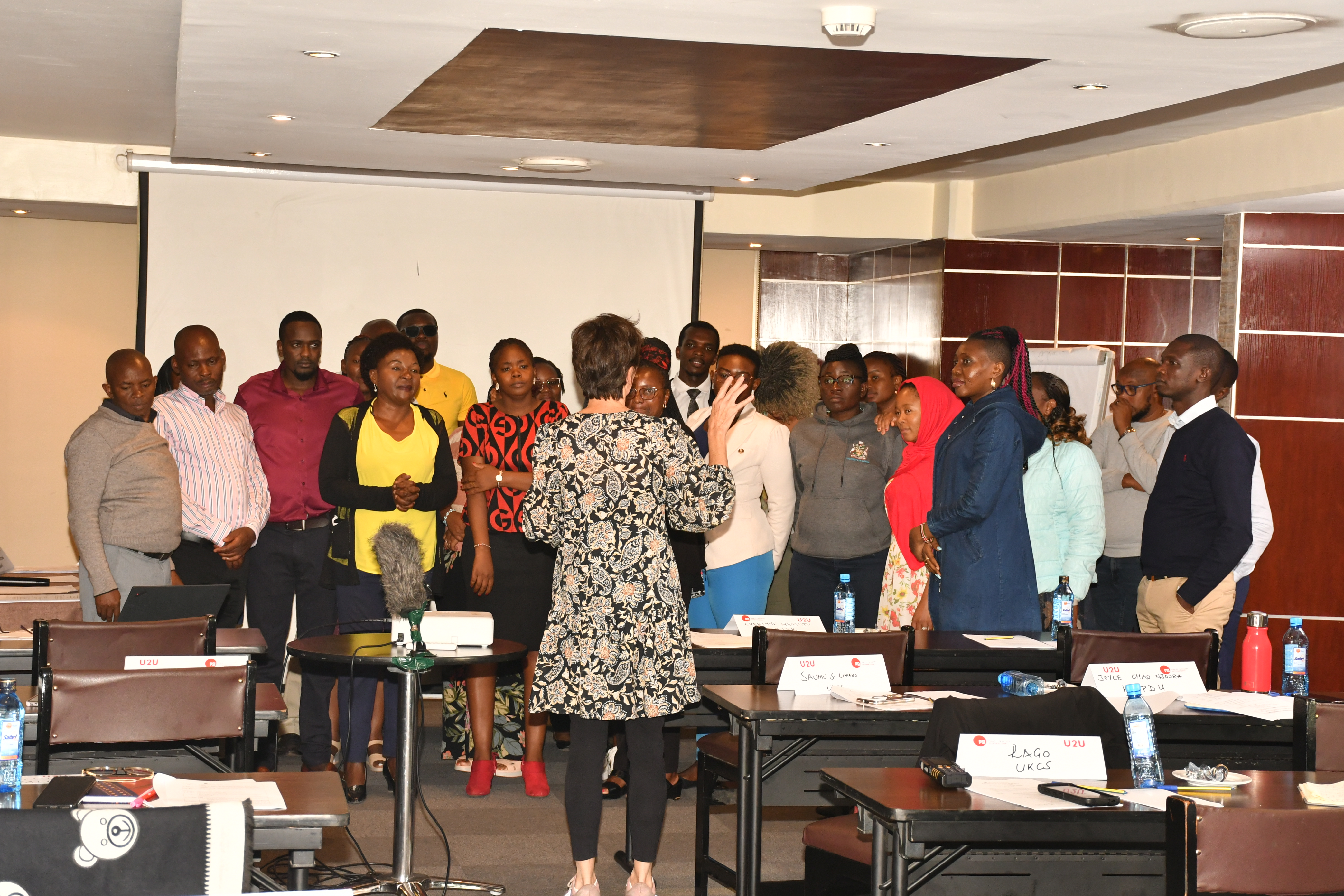
Kenyan public service trade unions came together for the last workshop activity of the project from 27 – 29 May 2025. As the project comes to a close, the workshop provided an opportunity to reflect on the process - building knowledge, deepening organising capacity, and strengthening their ability to defend workers in an era of increasingly severe climate impacts.
Since 2023, when this iteration of the project began, Kenya has faced a succession of climate-related emergencies. Some counties have been devastated by heavy rains and catastrophic flooding, while others have endured prolonged drought, acute water scarcity, crop failure, and livestock deaths. The country experienced its worst drought in 40 years between 2020 and early 2023, followed by intense rains that caused widespread flooding at the end of 2023, and from March - May 2024.
Public sector workers are on the frontlines of these crises—supporting communities, maintaining vital services, and often working in unsafe or rapidly changing environments. The workshop reaffirmed that strengthening public services and worker protection is central to a just transition.
- Read this in:
- en

Sandra van Niekerk
The workshop focused on a number of different areas as we rounded up the activity of the project:
Engaging allies
Trade Union Climate Policy Priorities
Occupational Safety and Health and Climate Change
Way Forward

Working with allies
Rebecca Okello, climate lead from COTU-K (Central Organization of Trade Unions Kenya), was invited to speak to the meeting and engage with participants. This was an important intervention, strengthening the relationship between COTU-K and the public sector trade unions, and helping to build the voice of public sector trade unions in the climate change deliberations and interventions of the National Trade Union Centres. She emphasised that labour movements must defend workers, promote social equity and help shape a fair transition. She noted that while trade unions were consulted on Kenya’s Nationally Determined Contribution, they are not seen as central to its implementation. She pointed out the dangers of debt-driven financing, which increases government debt and undermines the ability of government to improve public services, because they are paying so much interest on loans. Worker protection—such as heat stress prevention and safeguards against job displacement—remains weak in national climate plans.
For labour, the priorities for a just transition include:
· Integration of a climate clauses into Collective Bargaining Agreements
· Reskilling and social protection for affected workers – especially in sectors such as waste, agriculture and fossil fuel usage
· Stronger role for unions in climate financing monitoring and project design
· Investment in public infrastructure and green jobs led by state and counties
· Advocacy for climate-resilient public services: water, waste, education, and health
· Build alliances with environmental justice and community groups

Trade Union Climate Policy Priorities
Participants identified key areas where unions must strengthen their policy demands and bargaining strategies:
Collective Bargaining Priorities:
· Climate clauses allowing flexible working hours during extreme weather
· Environmentally friendly and climate-appropriate PPE
· Establishment of climate change committees within unions and/or workplaces
· Advocacy for workplace climate funds to respond to emergencies
· Accurate data collection to inform negotiations
· Proper union representation on public bodies and boards
· Waste management policies and sustainability practices in workplaces
· Strengthening collaboration across unions and sectors
Workshop participants identified a number of areas that the PSI National Coordinating Committee (NCC) could continue working on:
· Continued climate education and awareness raising for members
· Engaging in practical activities such as tree planting and river clean-ups
· Ongoing learning from unions in other countries
· Building stronger partnerships with civil society
· Demanding transparency and accountability in climate finance
· Advocating for Just Transition policies
· Supporting skills development and retraining programmes
Occupational Safety and Health and Climate Change
The workshop placed strong emphasis on OHS, highlighting that climate change is already a workplace hazard.
Under the OSH Act of 2007, employers must ensure safe workplaces, provide training, and establish safety committees in workplaces with more than 20 employees. Some unions reported active involvement in these committees, but overall, climate-related health and safety risks remain insufficiently addressed.
Key climate-related OSH risks identified:
· Extreme heat – risk of heat stress, fatigue, dehydration, increased risk of occupational accidents
· Solar UV radiation – skin cancers, acute eye damage, weakened immune systems
· Air quality – increased respiratory problems from wildfire smoke or pollution
· Extreme weather events– unsafe work conditions, increased injury risks, destruction of records and equipment
· Vector-borne diseases – expanded range due to warmer temperatures
· Mental health impacts – trauma from repeated disasters and job insecurity
We then went on to discuss what issues could be taken up as part of the collective bargaining process to better protect our members from the health and safety impacts of climate change.
Some of the ideas that emerged included:
Bargaining priorities for climate-related hazards
During Floods
· Redeployment of workers to safe stations
· Non-punitive leave where travel is impossible
· Full pay maintained despite disruptions
During Extreme Heat
· Heat stress protocols
· Adequate hydration points
· Rest areas and cooling rooms
· Adjusted working hours
· Protective clothing
· Mental health support
· Regular monitoring of heat conditions
During Increased Fire Risks
· Training on fire suppression
· Accessible and effective equipment
· Clear protocols and defined duties
· Stronger grievance procedures
During Drought
· Emergency response plans
· Clear communication channels
· Fair compensation and job security
· Access to clean water for workers and their families
· Training on drought-related hazards
General OHS Demands
· Reskilling and upskilling where climate impacts change work conditions
· Strict adherence to OSH Act standards
· Mandatory worker participation in safety processes
· Quality PPE provided consistently
· Quarterly OHS equipment inspections
· Compliance with the Work Injury Benefits Act
· Alignment with sectoral standards and norms
Way Forward
The workshop concluded by identifying a number of concrete actions to strengthen the work on climate change:
· Ongoing collaboration with NGOs, CBOs and CSOs
· Strong advocacy on climate-resilient public services in mainstream and social media
· Continued research and data gathering to inform bargaining
· Learning from trade unions in other countries about what the collective bargaining clauses they are developing and negotiating around
· Establishing PSI climate change champions
· Engage government by inviting representatives to future workshops
· Continuous grassroots education and mobilisation
This final workshop reaffirmed the critical role of public service unions in shaping a just, worker-centred response to the climate crisis. Kenyan workers are already living with the impacts of climate change - strengthening public services and protecting workers are now urgent priorities.