HEALTH AND SAFETY PSI wins promotion of public investment, safer staffing for public service workers facing extreme weather OSH risks in new ILO guidelines
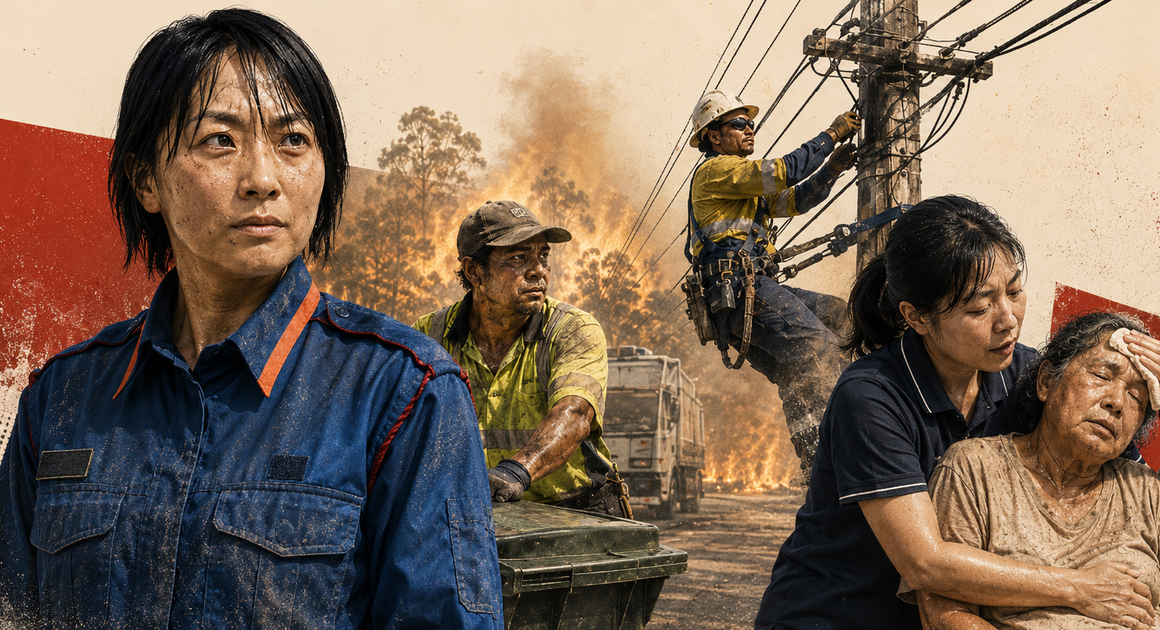
Public Services International (PSI), the global union federation for public service workers, has helped shape the world’s first set of international guidelines on extreme heat and extreme weather as frontline workers face rising occupational health and safety (OSH) risks.
- Read this in:
- en

Daria Cibrario
Public Services International (PSI), the global union federation for public service workers, has helped shape the world’s first set of international guidelines on extreme heat and extreme weather occupational health and safety (OSH) risk.
The guidelines were agreed at an International Labour Organization (ILO) Meeting of Experts on Occupational Safety and Health in Extreme Weather Events and Changing Weather Patterns, held between 20-25 April 2026 in Geneva.
Working with the other global union federations (GUFs), the International Trade Union Confederation (ITUC) and a range of national trade union centres, together through The Workers’ Group, PSI played a critical role as official Advisor to the Meeting of Experts.
We were effective in giving strong voice to the many public service workers exposed to unprecedented risks due to extreme heat and other extreme weather events and patterns.
What are extreme weather events and changing weather patterns?

Globally, more than 2.4 billion workers are exposed to excessive heat alone, affecting more than 70 per cent of the working population. In addition to heat, workers face OSH risks from extreme weather events such as floods, droughts, wildfires, tropical cyclones and sand and dust storms. Moreover, changing weather patterns including long-term shifts in temperatures and weather conditions can affect workers’ safety and health through cumulative and persistent exposures.
The focus of this ILO Meeting of Experts was on extreme weather events and changing weather patterns.
Extreme weather events are often associated with extreme heat or hurricanes and perceived as rare occurrences. However, they comprise many more weather events with unusual magnitude, timing, or location beyond heatwaves, and include cold waves, wildfires, heavy precipitation, drought, and tropical cyclones. Besides, while extreme weather events were was considered a rare or exceptional occurrence, they have become a regular occurrence as a result of the man-made climate breakdown.
Similarly, changing weather patterns refer to gradual and persistent changes in climate behaviour that pose long-term risks to OSH to workers, such as a persistent change in temperature, more air pollution and dust, and the spread of old and new biological hazards through vectors such as mosquitos in areas that were otherwise not typically subject to certain vector-borne diseases. These are illnesses caused by parasites, viruses and bacteria and transmitted by mosquitoes, ticks and fleas, cats, dogs, rats, snakes etc. Occupational exposure to parasitic and vector diseases, include malaria, trypanosomiasis, chagas disease, schistosomiasis, leishmaniasis, lymphatic filariasis, onchocerciasis, cysticercosis, echinococcosis, dengue, trachoma, yellow fever, rabies, and hantavirus.
Public service workers especially at risk

The background report Occupational safety and health in extreme weather events and changing weather patterns prepared by the ILO Occupational Safety and Health and Working Environment Branch (OSHE) for this tripartite expert discussion recognises that public service workers are particularly at risk, be it in the case of excessive heat or cold waves, but also in the case of cyclones, floods and industrial accidents.
When it comes to extreme heat the highest risks are faced by outdoor workers in physically demanding jobs and indoor workers in poorly ventilated workplaces and unregulated environments. This includes many public service jobs such as:
waste collection and management;
public emergency services, firefighters, emergency repair, restoration and utilities workers;
public space and green space management;
health and social care workers;
mortuary services
school cooks/janitorial services.
The report also recognises that workers can face heightened risk by wearing heavy clothing or PPE as part of their duties, such as firefighters,
The ILO reports that firefighters are especially at risk when it comes to wildfires as they working under physically demanding and prolonged conditions and acknowledges that an increasing number of firefighters across the world are dying while battling wildfires, while others face short-term respiratory issues and long-term health effects, cardiovascular diseases and ophthalmic conditions. Adverse mental health impacts have also been linked to wildfire suppression, including higher rates of post-traumatic stress disorder (PTSD) and lasting psychological symptoms, while social security continues to be lacking or insufficient in a majority of countries.
Flooding is also associated with waterborne diseases from contact with polluted water. Workers at high-risk include medical personnel, firefighters, other emergency worker, including utility workers involved in the clean-up and service restoration.
Tropical cyclones can often bring multiple hazards, such as extreme winds, heavy rainfall, storm surges and flooding, lightning and tornadoes. Ensuing risks include downed lines, live electrical equipment and other utilities (for example electricity and water); noise; falls from height or through openings; asbestos and lead; impact to the eyes and face from flying objects.
Again, high-risk groups of workers in this case include medical personnel, firefighters, emergency responders. First responders face risks such as drowning, physical trauma from debris, hazardous chemical exposures and water- and vector-borne diseases.
Clean-up workers and other emergency personnel face secondary hazards, like unstable infrastructure and chemicals, including lead, asbestos and solvents. Restoration workers have reported bacterial infections and respiratory issues, such as fever, cough, pneumonia and new-onset asthma, due to high levels of particulate matter and endotoxins.
Many of these cases are concretely exemplified in a PSI online report on public emergency workers released on UN world cities day 2025.
For the first time, ILO recognises workers' extreme weather health and safety risks
Adopted on 24 April, following five days of intense negotiations at the International Labour Organization (ILO), the conclusions set out measures to strengthen national OSH policies and workplace level measures for workers exposed to extreme weather events and changing weather patterns.
Their adoption marks a significant step in the ILO's efforts to address one of the most pressing and rapidly evolving challenges facing workers and enterprises worldwide.
The ILO expert meeting involved representatives of governments, employers, and workers - assisted by the ILO OSHE experts. It led to conclusions that represent the first global policy guidance on preventing and managing OSH risks related to extreme weather events and changing weather patterns.
The text is still currently under editing by the ILO and will be adopted by the ILO Governing Body in November 2026 and makes important recommendations to Governments, Employers and Workers and inform future ILO work.
PSI and union wins for at-risk workers

Although the meeting was confirmed at a very late stage, PSI rapidly consulted with the PSI OSH Network members as well as with PSI staff and regions their priorities on this key OSH area and received feedback from UNISON, the New South Wales Nurses and Midwives Association (NSWNMA), AGOEC, and the Indian Association of Firefighters among others which informed the proposals for amendments submitted by PSI in the Workers’ Group.
PSI secured the following language in the final text with the support of the wider Workers’ Group:
governments should - in consultation with the most representative employers’ and workers’ organizations “ invest in effective, safe and resilient public utility infrastructure as well as in staffing levels, training and equipment for frontline workers and public emergency and health services to ensure appropriate preparedness, response and resilience”.
governments should also “strengthen national labour inspection systems, in line with relevant ILO instruments, including through the allocation of adequate resources and the training of labour inspectors, and, as appropriate, other officials, to effectively enforce applicable legislation and provide technical information and guidance to employers, workers and their respective representatives, including inspection protocols related to extreme weather events and changing weather patterns”;
employers are required to “provide safe, suitable, gender-responsive personal protective equipment and material provided at no cost to the workers”.
Key measures in the forthcoming conclusions also include the recommendation to strengthen national frameworks include the establishment of evidence-based thresholds, including, occupational exposure limits; establishing or strengthening occupational health surveillance systems; and strengthening inter-institutional coordination among labour, public health, meteorological, environmental, infrastructure and disaster management bodies.
At the workplace level, measures include gender-responsive, documented risk assessments, and the determination of preventive and control measures; establishing, reviewing and maintaining emergency preparedness, response and recovery plans and procedures, and ensuring the consultation and participation of workers and their representatives in all OSH aspects related to extreme weather events and changing weather patterns.
PSI will provide a thorough analyses of the conclusions once they are published and adopted by the ILO Governing Body later this year.
Strong union delegation carried frontline workers voices

The Workers Group was led by the ITUC, and included representatives of national trade union centres, including: The Australian Council of Trade Unions (ACTU); the Self-Employed Women’s Association (SEWA); the Confédération des Travailleurs des Secteurs Publique et Privé of Mauritius (CTSP), Congress of South African Trade Unions (COSATU), Instituto de Salud y Seguridad de las y los Trabajadores de la Asociación de Trabajadores del Estado (ISSTATE) of Argentina, Central de Trabajadores de la Argentina Autónoma; the General Federation of Trade Unions (GFTU) of Jordan; the American Federation of Labor – Congress of Industrial Organizations (AFL-CIO).
Beside PSI’s, Advisors attending the Meeting of Experts included the OSH leads from global union federations: Building and Wood Workers' International (BWI); UNI Global Union; International Union of Food, Agricultural, Hotel, Restaurant, Catering, Tobacco and Allied Workers' Associations (IUF); the International Transport Workers' Federation (ITF); the European Trade Union Confederation (ETUC), the European Trade Union Institute (ETUI) and IndustriALL Global Union
The Workers’ Group spokesperson was José Enrique Oñate Vera of the Unión Nacional de Trabajadores (UNT) of Mexico. Social partner’s representatives included: Barbados, Brazil, Qatar, Turkey, Greece, Japan among others for governments; Belgium, Nigeria, Madagascar, Argentina, Australia, Spain for employers.
Next steps
The conclusions adopted provide a useful basis for further progress towards stronger national policies and concrete measures in workplaces.
"The adoption of these conclusions sends a clear signal that the world of work is taking OSH impacts of extreme weather seriously. The next step is turning this guidance into action at the national and workplace level,” said Joaquim Pintado Nunes, Branch Chief of the Occupational Safety and Health and Working Environment (OSHE) Branch.
Resources from the ILO Meeting of Experts on OSH