UN Water Conference Preparatory Meeting PSI calls for workers' rights in the water sector and for water as a public good at UN Conference
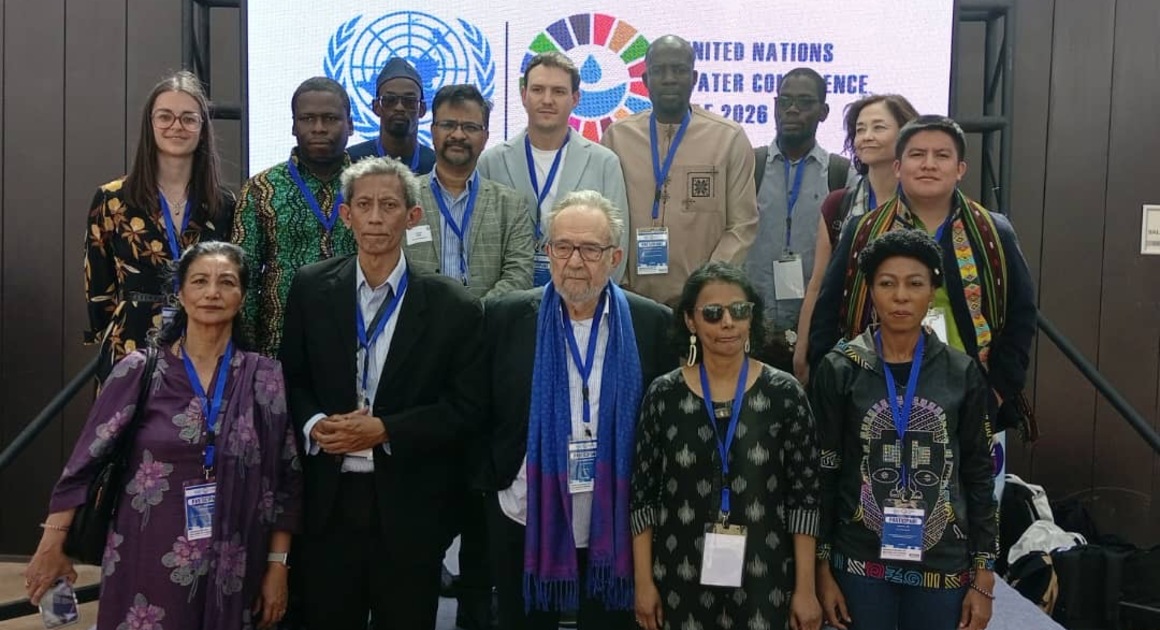
PSI participated in the UN Water Conference Preparatory Meeting that took place in Dakar, Senegal, 25–27 January 2026, advocating for water and sanitation as human rights and public goods.

Daria Cibrario

David Boys
The UN’s first water conference in 45 years, held in New York in 2023 saw the almost complete shut out of progressive water justice movements, both in terms of participation and especially in terms of representation on panels and in speaking opportunities. These were dominated by a group calling themselves the Global Commission on the Economics of Water (GCEW) advocating using public funds to guarantee the profits of private investors (the World Bank’s ‘billions to trillions’ or ‘innovative financing’ policies) and new forms of privatisation. The GCEW is largely funded by the OECD and the government of The Netherlands. The World Bank’s water investment strategy is failing the water and sanitation sector, with less than 2% of private finance being directed to infrastructure and services : this is because profits are neither quick enough nor high enough to attract private investors.
The next 2026 UN Water Conference is scheduled for 2-4 December in the United Arab Emirates. This time various civil society networks focusing on defending water and sanitation as a fundamental right and a public good and on advancing water justice are better prepared, thanks in large part to the work of indefatigable Pedro Arrojo-Agudo, the UN Special Rapporteur on the rights to water and sanitation, who started already in 2023 to mobilise within the UN and with member states for greater participation. PSI has long been part of these efforts and struggles, and is a founding member of the People’s Water Forum (PWF) the network of water NGOs and unions created more than 20 years ago. Its core group consists of the Council of Canadians/Blue Planet Project; the World Council of Churches that have an important Ecumenical Water Network; and Ingenieros sin Fronteras of Catalonia (Spain).
The recently elected government of Senegal hosted a preparatory meeting in January 2026 for the December conference where ‘stakeholders’ worked on the six thematic areas one day prior to the ‘high-level’ two-day meeting. The progressive left political orientation of the current government (Diomaye Faye and Ousmane Sonko) marks a notable change in terms of water policy compared to the previous center-right government of president Macky Sall (2012-2024), whose government hosted the corporate-led World Water Forum in 2022.
Although stakeholders were admitted to the Dakar meeting, many were unable to come in person (budget, visas) and hybrid facilities were not available.
The 6 themes and the countries that will coordinate work on them towards the UN Water Conference are:
Water for People: Ghana and Switzerland
Water for Prosperity: China and Spain
Water for Planet: Egypt and Japan
Water for Cooperation: Finland and Zambia
Water in Multilateral processes: Germany and Mexico
Investments for Water: France and South Africa
The following two-day high level meeting prioritised speaking slots for member states, UN agencies and experts, with little space for community voices. However, our messages from the ‘stakeholders meeting’ were summarised by the six rapporteurs.
Some key messages from stakeholders :
Private control of water, whether through finance, management, or other means, is unacceptable, for a variety of reasons.
The UN should institutionalise water meetings, holding them every 2-3 years, with participatory mechanisms that reflect power asymmetries between states but also between civil society, states and corporations. These UN meetings should be clearly separate from the triennial corporate and World Bank-driven World Water Forum.
Make clear the distinction between ‘stakeholders’ – which can mean anyone – and ‘rights holders’; and focus on those who are unable to enjoy their rights to water and sanitation, get them to speak at UN meetings, with member states, with NGOs, etc. This requires extra effort to ensure not only their ‘participation’ but their ability to influence decisions and actions.
PSI’s strategy at UN water meetings has been to push for incorporating core labour issues within the broader progressive agendas of human rights, public services, social justice, environmental protection, and climate change. PSI leads on the resistance against privatisation given that corporate actors active in water tend to pursue profit maximisation by cutting wages and benefits, outsourcing jobs and weakening unions, all while profiting on a fundamental resource for life and for the planet. NGOs and consumer groups often focus on the lack of transparency and accountability with private operators, on tariff increases and problems of access and quality. PSI also leads on remunicipalisation and public-public partnerships, whereby strong public utilities help weaker ones - including through the water operator partnership (WOPs) programmes of UN-Habitat’s GWOPA arm, mainly by staff training and development. Stronger public utilities will benefit our members.
Pedro Arrojo-Agudo also proposed to create a Social Platform of Water within the UN water system that is to be established, which would bring together more groups, actors and institutions focused on water. The People’s Water Forum (PWF) pre-meeting preparations and coordination with allied groups contributed significantly to fostering a pro-people atmosphere throughout the preparatory process. Maintaining these collaborations and momentum will be critical in the lead-up to the main UN Water Conference.
The water justice network of PSI is a member should focus on the 12 governments co-leading the six thematic areas. Our common priorities will include the demand for deeper inclusivity and a human-rights-based approach to water governance, which will help frame policy making.
David Boys, representing PSI, spoke at the stakeholder session in investments for water and said : “Wherever there is universal access to water and sanitation services, it is possible only through massive public finance, management and operation. Now we hear that public funds must be used for attracting private finance… blended and innovative finance. But private finance can’t or won’t handle the multi-decade investment cycles required – in part because poor people don’t have enough money to meet the needs of the BlackRocks of the world. So, they are not coming to water.” David indicated that global tax reform and debt relief are needed urgently, for all of the SDGs, not just for water.
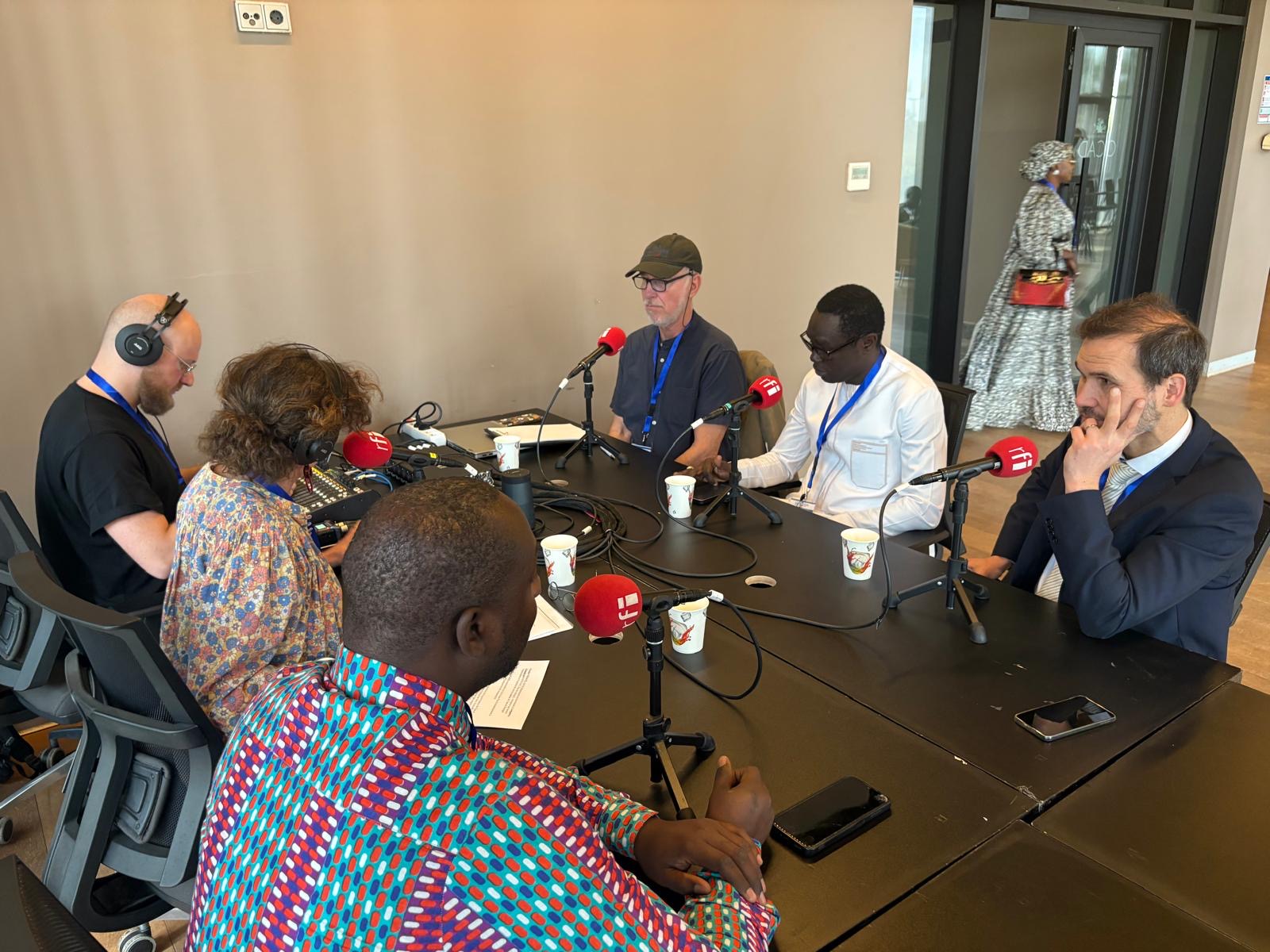
During a roundtable interview with Radio France International (RFI), David pointed out that public-private partnerships (PPPs) don’t work because the private ‘partner’ must maximise profits and pay dividends to shareholders, making it impossible for them to meet social and environmental priorities of government. In water, you can’t cut the cost of water treatment chemicals and processes, nor the electricity needed to pump water from reservoirs to treatment plants to households. The only cost to cut is in staff, which first requires that you weaken the unions and target their leaders.
Statements issued in Dakar:
People’s Water Forum PWF Statement
African Water Justice Network AWJN Statement
A news story on the Dakar summit, from 28-01-2026, p.5 of the subscribers’ page
RFI Broadcast PPP section starting at 31 minutes, in French only