Fighting Privatisation PSI Urges to Halt Privatisation Capital Hospital in Islamabad
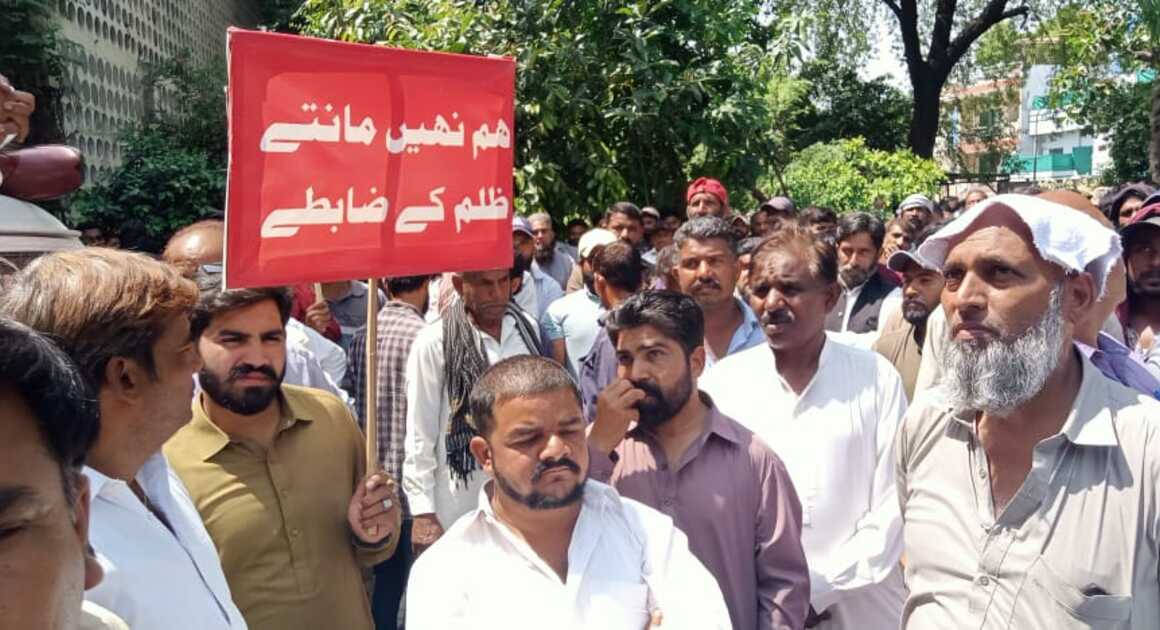 CDA Mazdoor Union has been fighting against privatisation for long, including strikes and demonstrations on streets
PSI writes to the Asian Development Bank (ADB) and Capital Development Authority (CDA) to halt privatisation of Capital Hospital CDA in Islamabad. The letter warns that the move will increase inequality, compromise care quality, raise government costs, and violates Pakistan's human rights obligations under CEDAW.
- Read this in:
- en

Jyotsna Singh
PSI has written to the ADB and CDA expressing grave concerns about the proposed privatisation of Capital Hospital CDA in Islamabad through a public-private partnership arrangement. The letter outlines extensive international evidence demonstrating that health privatisation undermines equitable access to care, exposes workers to unsafe conditions, increases costs to government, and exacerbates health inequalities—particularly for marginalised populations who cannot afford out-of-pocket fees.
The letter calls for strengthening public ownership with increased financing and democratic oversight. It emphasises that privatisation violates Pakistan's human rights obligations under international treaties including CEDAW.
Read the full letter:
To,
1. The President,
Asian Development Bank, 6 ADB Avenue, Mandaluyong City, 1550 Metro Manila, Philippines
2. Ms. Emma Fan,
Country Director, Asian Development Bank, Pakistan Office
3. Mr. Muhammad ali Randhawa
The Chairman, Capital Development Authority of Islamabad, Civic Centre, G-6, Islamabad
Subject: Urgent need to suspend proposed privatisation of Capital Hospital CDA, Islamabad
Dear President Kanda and Chairman Randhawa,
I write on behalf of Public Services International (PSI)—the global trade union federation representing over 30 million workers in public services across 154 countries—to express serious concerns regarding the proposed privatisation and public-private partnership (PPP) arrangement for Capital Hospital CDA, Islamabad.
We join PSI affiliates in Pakistan who have raised the alarm that this project, if implemented as currently envisaged, will undermine equitable access to health care services, expose workers to unsafe and unjust working conditions, burden the public purse, and exacerbate existing health inequalities. Our opposition is grounded in extensive international evidence. Health workers around the world have fought privatisation because the only way to extract profits from health systems is to undermine the universal right to health. A for-profit hospital must
Increase charges for patients
Increase expensive, and often unnecessary, health interventions for those who can pay
Reduce staffing costs by cutting the number of health workers and support and cutting their wages and conditions
Refuse health services to those who cannot pay
Increase costs to the government
International Evidence on Health Privatisation
A broad body of research shows that privatisation of health services—especially arrangements that prioritise private profit over public welfare—has frequently had disastrous outcomes for populations, particularly the most marginalised:
Systematic reviews and empirical studies have documented that privatisation often reduces utilisation of services, increases inequity in access, and can compromise quality of care, disproportionately impacting vulnerable populations who cannot afford out-of-pocket fees.
Recent analyses find that greater involvement of for-profit providers in health care delivery is associated with worse population health outcomes, including higher mortality indicators in contexts where private financing and delivery are prominent.
Research has linked privatisation and the introduction of user fees with greater financial barriers to care for the poor, undermining the fundamental principle of health as a universal human right.
This evidence was further illustrated through the Covid-19 pandemic where countries that relied more on private health financing tended to do worse in reducing Covid-19.
Investigations by the International Consortium of Journalists and Bloomberg have exposed the devastating impacts of health privatisation supported by International Financial Institutions that left a trail of crushing debts, patient detentions, over charging and medical decisions driven by profits. In September last year PSI and 60 other organisations wrote to the International Finance Corporation and World Bank about profit-driven abuses by IFC clients, Evercare Health Fund/ TPG and their investments in Avenue Hospital (Kenya) and Evercare Hospital (Lahore). These abuses include violations of patients and workers’ rights and increases in poverty and inequality. Further, the use of public funds by the ADB to undermine human rights and development necessitates action by contributing governments.
Public-Private Partnerships (PPPs) and Government Costs
While PPPs are frequently presented to mobilise private finance and expertise, experience shows that governments often incur higher long-term costs due to guaranteed payments, contingent liabilities, and inflexible contracts that lock public budgets into long-term financial commitments. Even the International Monetary Fund has warned that “PPPs can be used mainly to bypass spending controls, and to move public investment off budget and debt off the government balance sheet, while the government still bears most of the risk involved and faces potentially large fiscal costs.”
Independent evaluations of PPPs in health and other public services have found that risk can be transferred back to the public sector, with governments bearing the burden of revenue guarantees and cost overruns when projected demand or efficiency gains do not materialise.
In hospital PPPs in some countries, early terminations or renegotiations of contracts have triggered costly settlements and budgetary stress, far exceeding original projections. The government will be exposed to further risk if it seeks to renegotiate contracts as foreign investors pursue the government for billions of dollars through Investor State Dispute Settlement clauses, as is currently the case in relation to K-Electric.
Pakistan’s Experience and UN Treaty Body Concerns
Pakistan’s own health system reflects ongoing challenges in health financing and access:
Out-of-pocket expenditures constitute a large share of total health spending, with a substantial proportion flowing to private providers, often imposing catastrophic financial burdens on households—especially low-income families.
The reliance on private sector services without adequate public financing and regulation has been linked to widening disparities in access and poorer health outcomes for marginalised groups.
Relevant United Nations human rights mechanisms have already signalled concerns about privatisation and its impacts:
The UN Committee on Economic, Social and Cultural Rights (CESCR) in its General Comment No. 24 has emphasised that privatisation of essential public services—including health—can reduce affordability and quality and has warned that states retain obligations to ensure rights are realised regardless of service delivery models.
CESCR has specifically raised concerns when reviewing Pakistan that the right to health is being constrained by “the very low level of public funding allocated to the health sector; the insufficient coverage of the National Health Insurance Programme; and the weak public health system that has led to the heavy reliance on private health services”.
The UN Special Rapporteur on extreme poverty and human rights has observed that privatisation can amount to a human rights violation, often violates the principle of non-discrimination, transforming rights holders into clients and marginalising those with the greatest need.
The Committee on the Elimination of Discrimination against Women (CEDAW) has already raised concerns about the impact of health privatisation in Pakistan and has called on the government to ensure “that the privatisation of the health sector and the devolution to the provinces of the main health competence do not reduce further the already limited health services accessible to women.” As the hospital provides maternal and child health services, the proposal to privatise will violate Pakistan’s CEDAW obligations.
For these reasons, PSI urges the Asian Development Bank and the Capital Development Authority to:
Immediately halt the proposed privatisation/PPP model for Capital Hospital CDA in favour of strengthening public ownership and management with increased public financing and democratic oversight.
Undertake a comprehensive human rights and equity impact assessment, in line with UN human rights guidance, prior to advancing any privatisation initiative.
Consult meaningfully with the CBA union (CDA Mazdoor Union) of affected workers, and health rights advocates to ensure that health system reforms protect—rather than undermine—the right to health for all workers and residents of Islamabad.
PSI stands ready to engage constructively with ADB, CDA, and relevant authorities to ensure health reforms advance equity, social justice, and universal access to quality care.
We appreciate your attention to these urgent concerns and look forward to your response.
Yours sincerely,
Kate Lappin
Regional Secretary, Public Services International, Asia Pacific