Press Release Pakistan Unions demand halt on privatisation as new report exposes windfall profits by private companies
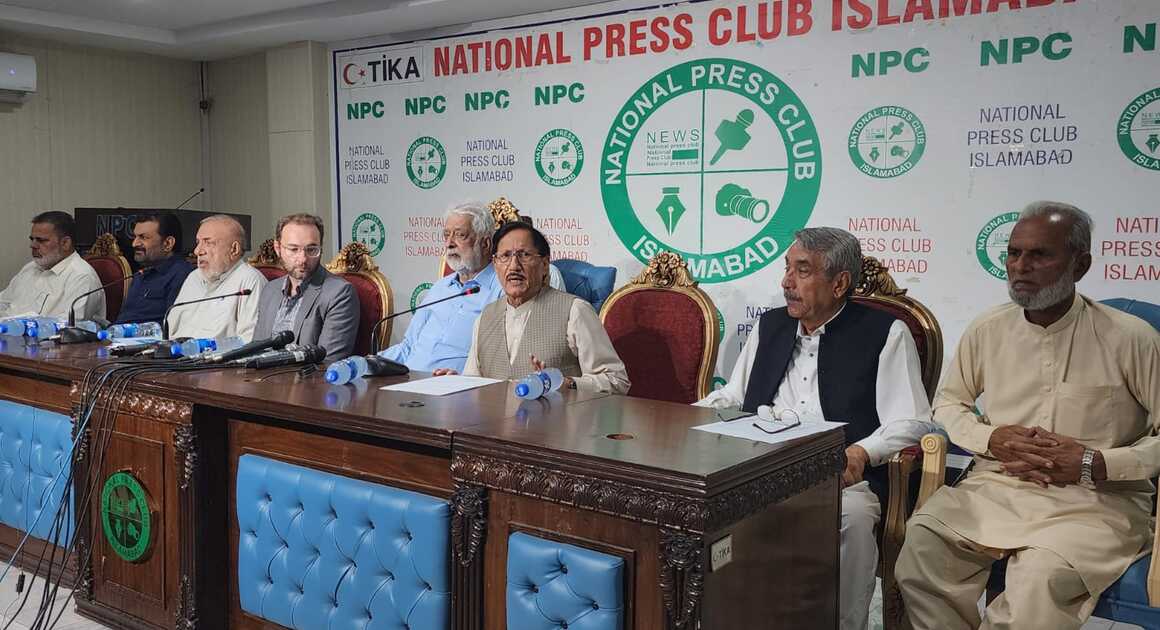
A new report shows how policies Pakistan used to bring private investment into the electricity sector have led to windfall profits and soaring electricity costs for households and businesses. This report urges pause on the decision to privatise electricity distribution, arguing that the one-sided power purchase agreement model is the source of the electricity crisis, a crisis that cannot be solved by further privatisation.
- Read this in:
- en

Jyotsna Singh
Islamabad, Pakistan – Public Services International (PSI) is calling for an immediate moratorium on the proposed privatisation of Pakistan’s electricity distribution companies, in light of a new report showing how private investment in electricity generation has led to windfall profits for companies and soaring electricity prices for consumers. As Pakistan navigates a deepening debt crisis and energy markets shocks, the report identifies how the rules imposed by Washington-based financial institutions across the global South in the 1990s continue to damage economic development today.
“Paying More for Less: payments and profits in Pakistan’s privatised power sector”, was jointly commissioned by Public Services International (PSI) and Friedrich Ebert Stiftung (FES) and was written by Edward Miller of the Centre for International Corporate Tax Accountability and Research (CICTAR). It shows that over the last two years, more than half of the electricity costs paid by consumers went towards paying electricity companies not to generate electricity. Under the “power purchase agreement” model, firms are compensated through “cost-plus” energy payments for delivering electricity to the grid, and capacity payments for when they generate nothing. Payments are denominated in US Dollars (USD) to protect investors from currency depreciation, and they have also received generous tax exemptions.
The 2022 energy shock exposed the structural dysfunction of the model: payments escalating sharply as global market volatility deepened, and actual electricity delivery collapsed. Over the last two years, more than sixty percent of payments under power purchase agreements have been to compensate for unused capacity. In the last decade, generating capacity has increased by 86% but delivered electricity is up only 31%, with per capita consumption hardly moving.
Chaudhary Muhammad Yasin, General Secretary, CDA Mazdoor Union, Islamabad
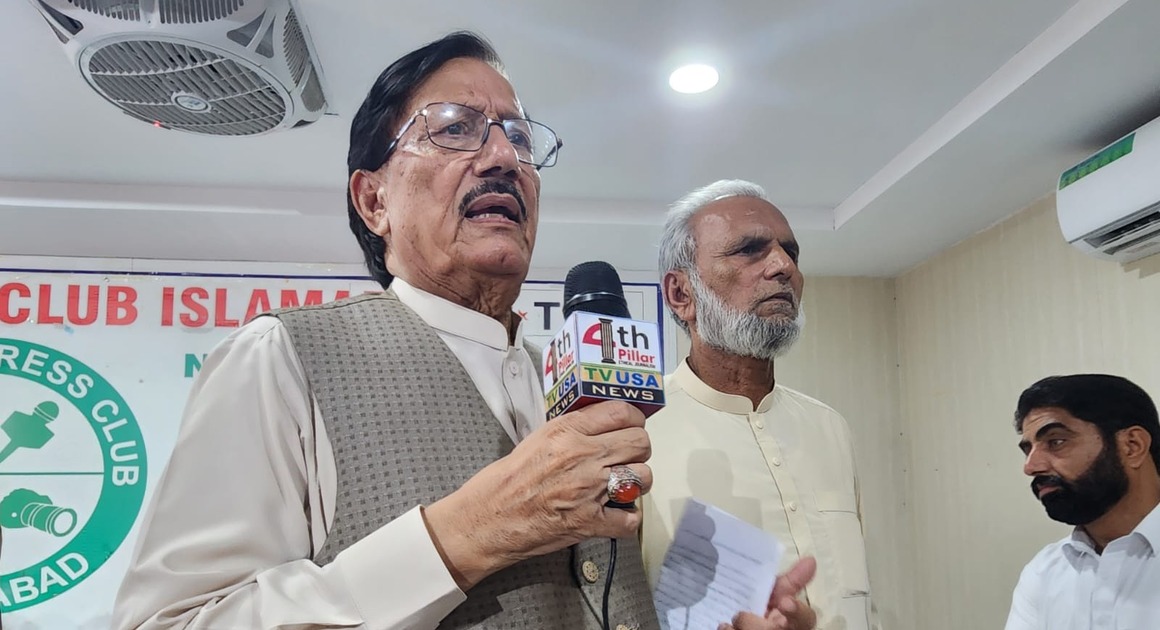
“The CDA Mazdoor Union has won a case in Pakistan's Industrial Relations Commission against privatisation of key public services. It proves that privatisation can be beaten through collective action.
Despite this compelling evidence, the government continues to push ahead with privatising electricity distribution companies (DISCOs) under the pressure of International Monetary Fund (IMF).
"This system is a profound moral and economic failure," said Kate Lappin, Regional Secretary, PSI Asia Pacific. "Private corporations pocket billions for idle plants while working families are crushed by soaring tariffs. Privatising distribution will only drain more of the national income out of working peoples’ pockets to fund private sector returns. The failures exposed by this report should help governments understand the risks involved with letting the private sector lead the transition to a renewable energy economy.”
The report also details how, under the PPA model, the expansion of rooftop solar — a rational response to surging tariffs — is driving a dangerous "utility death spiral." As wealthier consumers exit the grid, poorer households, unable to invest in solar, are left to carry the cost of idle capacity.
The report then analyses company-level financial data, revealing staggering corporate windfalls:
The Hub Power Company (HUBCO) received PKR 542 billion in capacity payments over eight years, while electricity delivery fell 23% and pre-tax profits rose 623%.
Sahiwal Independent Power Producer’s energy delivery declined 73% over three years, while the price of electricity increased 382%.
Port Qasim Electric Power Company delivered 91% less electricity over four years, while the average real cost rose more than 1,000%.
Abdul Latif Nizamani, Central President, All Pakistan WAPDA Hydro Electric Workers Union (APWHEWU)

While private companies receive billions on idle assets, WAPDA workers still power the economy for a fraction of the cost.
The report shows that Pakistan’s Water and Power Development Authority (WAPDA) continues to account for more than a quarter of all electricity at a fraction of the cost of these companies. In recent years the public sector has accounted for roughly two-thirds of electricity delivered to the grid.
“Our report exposes how the electricity sector has enabled enormous wealth to be extracted from vulnerable communities to wealthy shareholders. In some instances, the PPA system has enabled corporate profit margins exceeding 60%, while working people have paid the cost through soaring prices and deepening deindustrialisation of the economy”, said Edward Miller, researcher with CICTAR and lead author of the report.
"Selling off distribution networks to profit-seeking foreign entities will amplify failures at the heart of the system," added Lappin. "Three decades of privatisation have failed to deliver a secure supply of electricity to support national economic development. Our 2023 public hearings showed that workers have borne the brunt of this model. Halting plans to privatise our distribution is a crucial first step towards a democratic energy system that delivers for working people."
Trade unions in Pakistan have been at the forefront of the resistance to privatisation for decades, holding multiple waves of strike actions and other forms of protest, including against the current proposal.
Edward Miller, Researcher, Centre for International Corporate Tax Accountability and Research (CICTAR)
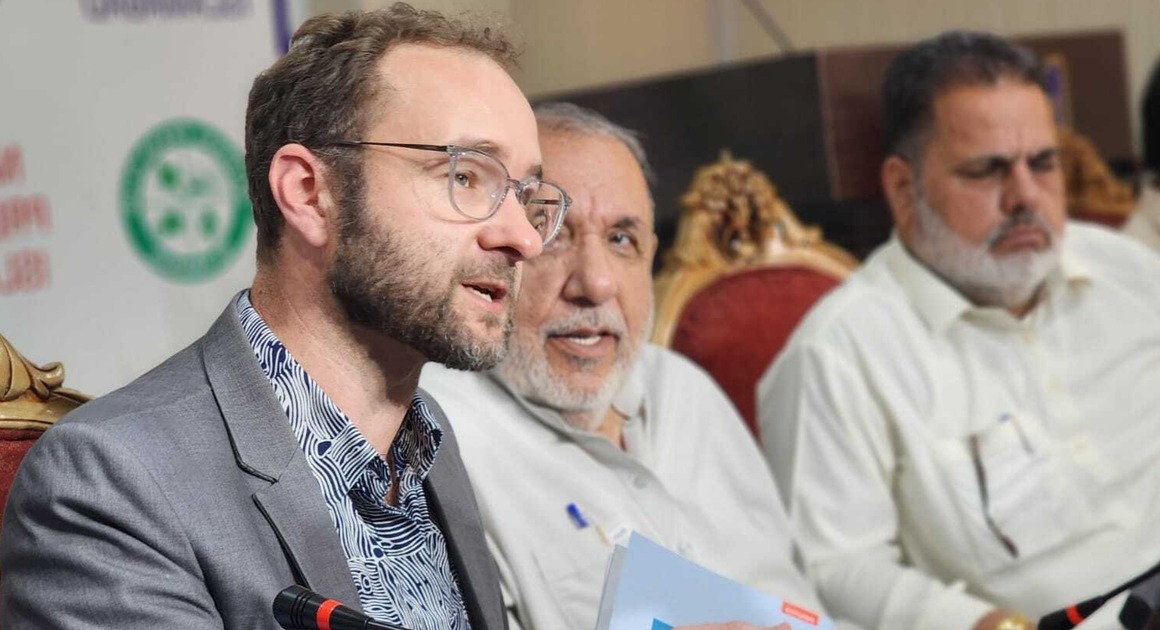
In some instances, the PPA system has enabled corporate profit margins exceeding 60%, while working people have paid the cost through soaring prices and deepening deindustrialisation of the economy
"While private companies receive billions on idle assets, WAPDA workers still power the economy for a fraction of the cost. Privatisation has meant mass job losses, precarious contracts and unaffordable electricity for our families. Electricity is a public good and should be managed democratically. Our union will not sit idle and let private investors extract billions from our households and communities. We will resist any further attempts to privatise our electricity system”, said Abdul Latif Nizamani, President, All Pakistan WAPDA Hydro Electric Workers Union (APWHEWU).
In many cases, Trade Unions’ efforts are leading to positive results also.
“In March this year, the CDA Mazdoor Union won a case in Pakistan's Industrial Relations Commission against privatisation of key public services such as sanitation, water supply, environment etc. It proves that privatisation and outsourcing can be challenged and beaten through organised, collective action. This is the model we need across sectors in Pakistan. The Trade Union movement in Pakistan will fight together against privatisation of public services that leave workers in precarious working conditions and no guarantee of decent work,” said Chaudhary Muhammad Yasin, CDA Mazdoor Union, Islamabad.
Kate Lappin Regional Secretary, PSI Asia & Pacific

Selling off distribution networks to profit-seeking foreign entities will amplify failures at the heart of the system. It will only drain more income out of working peoples’ pockets to fund private sector returns.
The report is available at: https://psishort.link/EnergyReport and https://pakistan.fes.de/publications.html
Media contacts:
Mir Zulfiqar Ali | weropk14@gmail.com | +92 3139230101
Asad Ur Rehman Aasi | aasi.tradeunionist@gmail.com | +92 3344988149