PSI Inter-America Network National Administration unions in Latin America set priorities in the face of the regional situation
In a regional context marked by profound transformations in the world of work, PSI Inter-America's National Administration Network is committed to consolidating stronger trade unions, with the capacity for organisation, advocacy and communication, in order to face current challenges and build fairer and more egalitarian societies.

Mayra Castro
Trade union representatives from the central administration of Latin America met on 12 and 13 March in Lima, Peru, in the framework of the National Administration Network of Public Services International (PSI), to analyse the regional political context and define strategies for action in the face of the current challenges in the world of work.
According to José Delgado, general secretary of FENTASE and coordinator of the network, one of the central themes of the meeting was the need for the trade union movement to take an active role in transforming social reality. "The idea is that trade unions are not just observing what is happening, but that they are actors who can influence and transform reality towards more social justice", said the leader.
The meeting, which was attended by PSI Inter-America's regional secretary, Euan Gibb, and the sub-regional secretary for the Andean countries, Susana Barría, who is the national administration sector's point of reference for the region, brought together trade union leaders from various sub-regions in an effort to strengthen the sector's continental articulation. The meeting was attended by FECOTRASERVIPÚBLICOS from Colombia, FENTASE from Peru, CSTB from Brazil, ANEP from Costa Rica, ANEF from Chile and UPC from Argentina.
The coordinating table of the network carried out a characterisation of the regional political moment with the aim of identifying concrete trade union interventions to strengthen democracy, peace and social justice. During the analysis, three main problems were identified that have a direct impact on trade union action, such as the informalisation of labour, which weakens the capacity of trade unions to represent broad sectors of the labour force, especially those linked to public services that are becoming increasingly precarious; digitalisation, which requires new organisational and political responses from the trade union movement; and the need to strengthen communication, building a regional narrative that makes trade union achievements visible and disputes the public sense in the face of the lack of space in the traditional media.
Gibb stressed that it is essential to "strengthen our communication capacity and use our own networks, as the traditional media often do not amplify the trade union voice". Among the priorities defined by the network was the defence of the right to strike, in the face of growing international questioning, as well as the strengthening of collective bargaining as a central tool in the trade union struggle.
The importance of international solidarity was also reaffirmed, with an emphasis on supporting the peoples and workers of countries such as Cuba, Palestine, Panama, Guatemala and Ecuador, where serious violations of rights are taking place.
The resolutions adopted aim to strengthen the political advocacy of the trade union movement, including work with parliaments and judicial systems, the strategic use of multilateral spaces such as the ILO, and greater articulation with civil society. The meeting also reaffirmed the validity of the Bogotá Declaration, adopted by the 13th Inter-American Regional Conference (IAMRECON) and the PSI Global Plan of Action, adapting its guidelines to the particularities of the central administration sector.
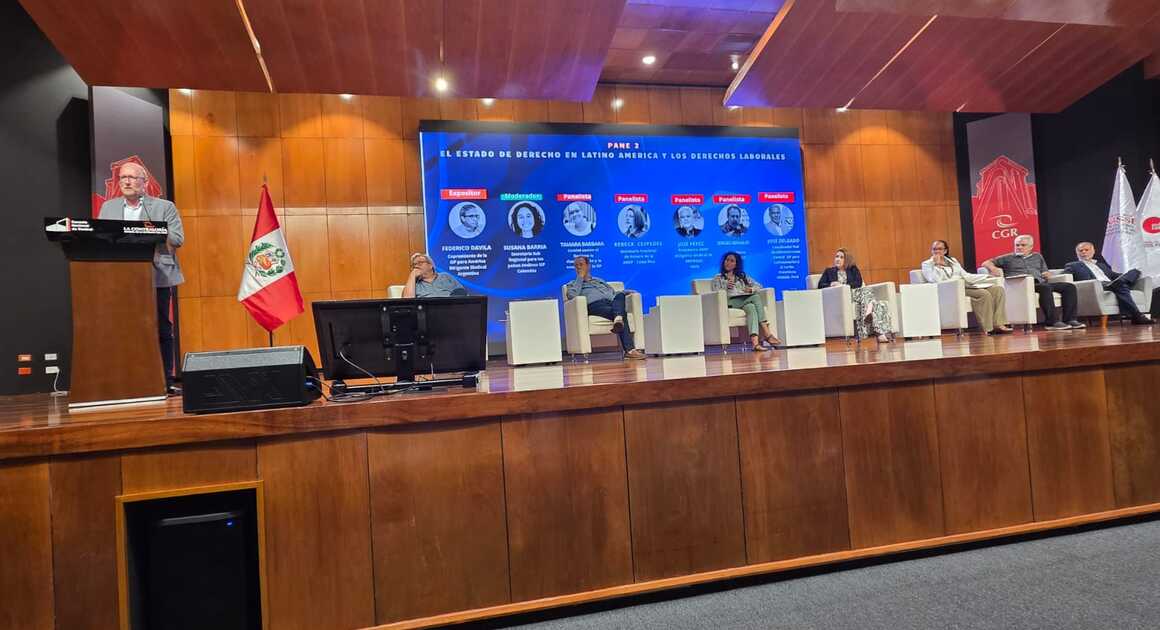
The meeting was held in parallel with an international forum on collective bargaining and the right to strike, as well as on the rule of law and labour rights in Latin America. The event also marked the meeting of the Latin American and Caribbean State Trade Union Front, comprising PSI, the Latin American and Caribbean Confederation of State Workers (CLATE) and the International Trade Union Confederation - Public Services (TUI-PSU). At the end of the meeting, a Final Declaration was adopted.
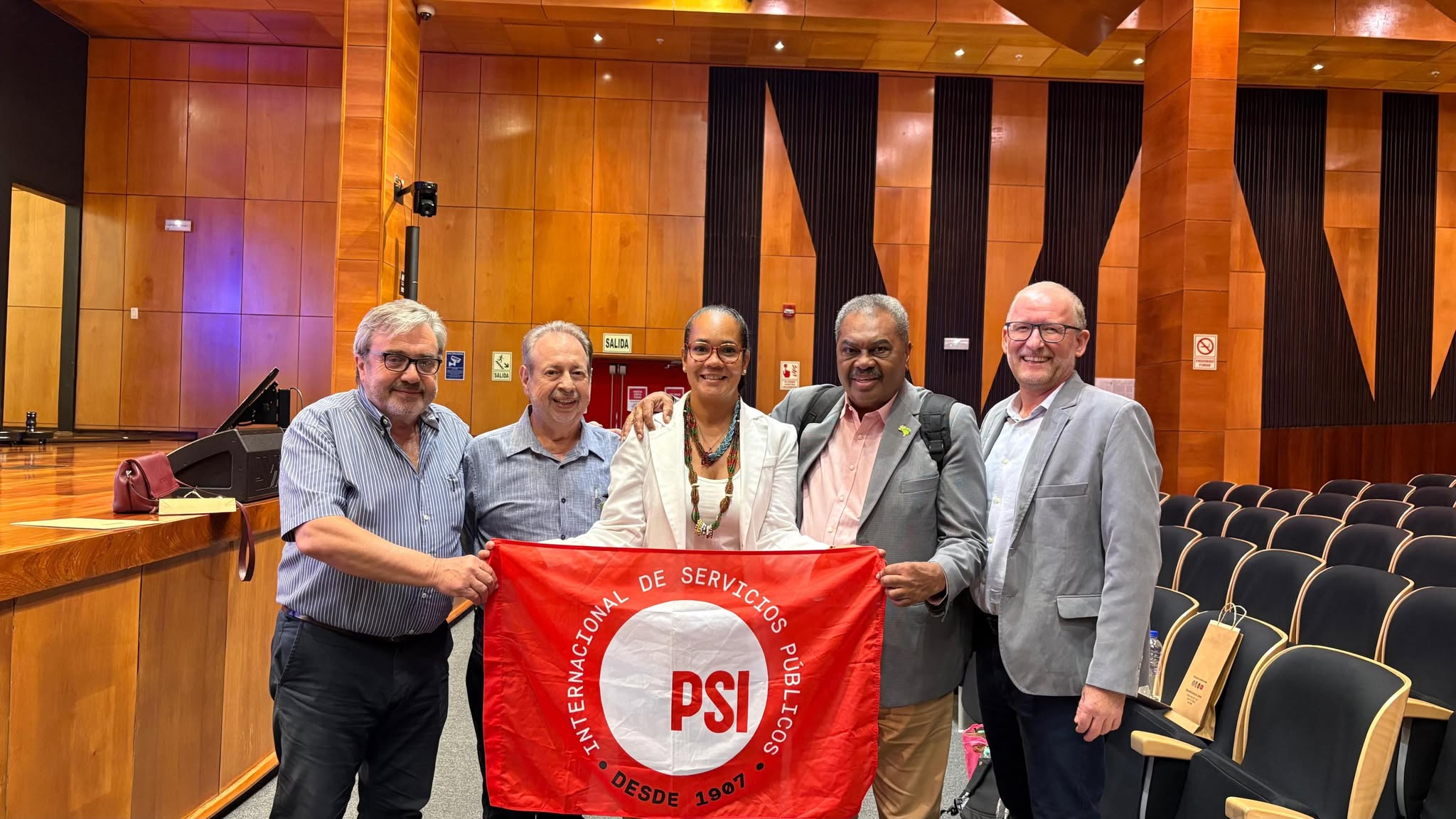
For Federico Dávila, PSI vice-president and coordinator of the Front, the network has been carrying out actions to strengthen trade unions since 2009. "In fact, in 2022 we constituted the Front of State Unions of Latin America and the Caribbean between PSI and CLATE, and in this significant meeting in Lima, PSIU-SP joined us. In this way, we have integrated all the public sector trade union organisations in Latin America and the Caribbean, fulfilling the original purpose of strengthening trade union organisations in the continent in order to confront the existing injustices generated by a right-wing financed by the international financial oligarchy," he said.