- Tags (4)
International Solidarity Jamaica: Practical solidarity and climate justice are critical in the face of devastation
One month ago, once again, a major hurricane in the Caribbean brought catastrophe and havoc to people’s lives in the Caribbean. This time, the people of Jamaica, especially those in the western parishes, are reeling from the impact of Hurricane Melissa; a storm that was fueled by climate change. With the help, support, and practical solidarity of scores of public services workers in Jamaica and from across the Caribbean, the population is slowly trying to rebuild homes and lives.
- Read this in:
- en

Sandra Massiah
November 30 marked the official end of the 2025 Atlantic Season. But one month ago, once again, a major hurricane in the Caribbean brought catastrophe and havoc to people’s lives. This time the people of Jamaica, especially those in the western parishes, are reeling from the impact of Hurricane Melissa; a storm that was fueled by climate change. With the help, support, and practical solidarity of scores of public services workers in Jamaica and from across the Caribbean, the population, especially those in the west of the island, is slowly trying to rebuild homes and lives. The estimated physical damage is currently 40% of GDP in 2024.
On October 28, the major Category 5 hurricane made landfall in Jamaica with sustained winds of 185 mph (297 km/h). Melissa was to the south of the island, it moved slowly and fueled by the unusually hot waters in the Caribbean sea, it strengthened from a tropical storm to a category 4 hurricane within 24 hours; and then increased intensity to Category 5.
Before Hurricane Melissa made landfall it brought many days of extremely high winds, lots of rain and flooding. It was the strongest storm ever to hit Jamaica and it went on to cause major flooding and damage across the northern Caribbean. It was also the last storm for the 2025 Atlantic hurricane season.
The Jamaica Civil Service Association (JCSA) and the Jamaica Association of Local Government Officers (JALGO) are PSI’s affiliates in the country. With their headquarters in Kingston – spared from the full impact of Hurricane Melissa - members of the two unions were quick to account for and find ways to provide immediate support to members. The two unions also started to assess the impact on members across the country and especially in the western parishes.
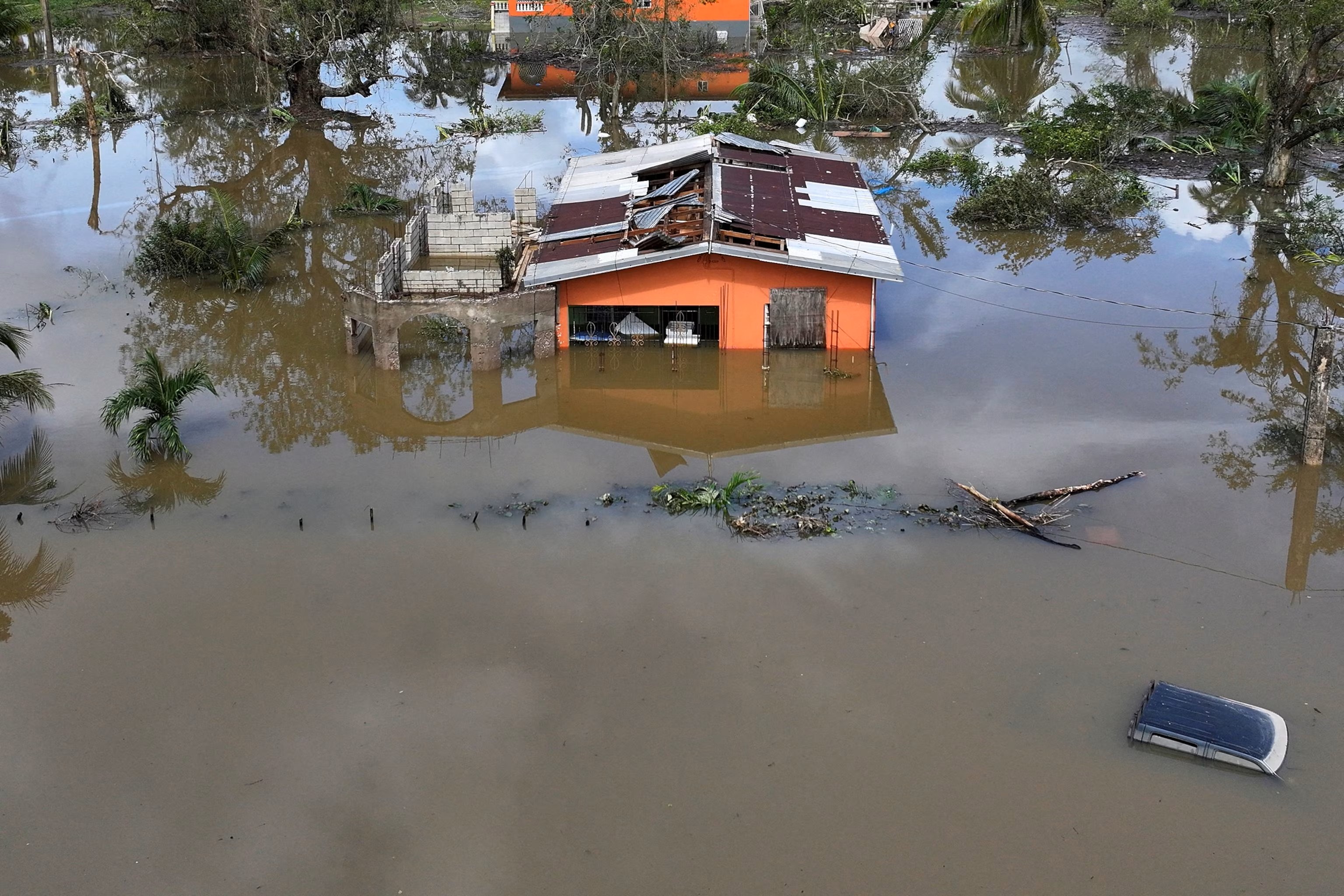
“We’ve been trying to contact members in St Elizabeth, Hanover, Westmoreland, but they are cut-off – no electricity, roads blocked … about a third of our members live in the western parishes …”, Techa Clarke-Griffiths, president of the JCSA said a few days after Hurricane Melissa made landfall. “…and because of the work they do, it is our members that have had to get out there to help while leaving their families to deal with the damage and trauma at their own homes. It is so overwhelming.”
“People have been desperate for water - drinking water. They come to the fire stations for water, for electricity to charge their ‘phones to contact family and friends,” Shamir Brown, first vice president of JALGO and a firefighter explained.
[In July 2024, St Elizabeth was one of the parishes in the country severely impacted by heavy rain and high winds from Hurricane Beryl. The category 4 hurricane left communities isolated and many without power and water.]
Still in relief mode
As each day passes, it is clear that the country is still very much in relief mode. There are multiple impacts of Hurricane Melissa. It has been described as a national crisis impacting education, health and care, infrastructure, transportation and all services on which the population relies. On November 21, the Ministry of Health and Wellness declared an outbreak of leptospirosis. The ministry reported 6 deaths, so far all men in their 20s. Most likely they were among those involved in the huge clean-up that is going on in many communities. There is a lot of uncollected rubbish that harbours rats, which are the most common carriers of leptospirosis. At the same time, the public health response has intensified. “We are stretched to the limit, vector control is a major concern and of course we also have to check on businesses,” said president of JALGO, Winnifred Meeks, chief public health officer for St Catherine.
PSI’s Caribbean affiliates as well as other trade unions in the Caribbean were quick in activating their disaster response mechanisms which include sending resources directly to the JCSA and the JALGO. In addition, many public services workers throughout the Caribbean are trained as part of the Caribbean Community (CARICOM) Disaster Relief Unit (CDRU). They joined teams of first responders who subsequently travelled to Jamaica to help restore electricity, clear roads and set up field hospitals, supporting workers in the Ministry of Health and Wellness.
Impact on union members and staff
The JALGO and the JCSA have been collaborating, relying on their individual and collective strengths, sharing contacts and information to ensure the appropriate response at both national and local levels. The two unions appreciate the solidarity support of PSI affiliates in the Inter-Americas who have reached out and are providing various levels of support so that the unions can assist in humanitarian efforts as well as more targeted support to union members.
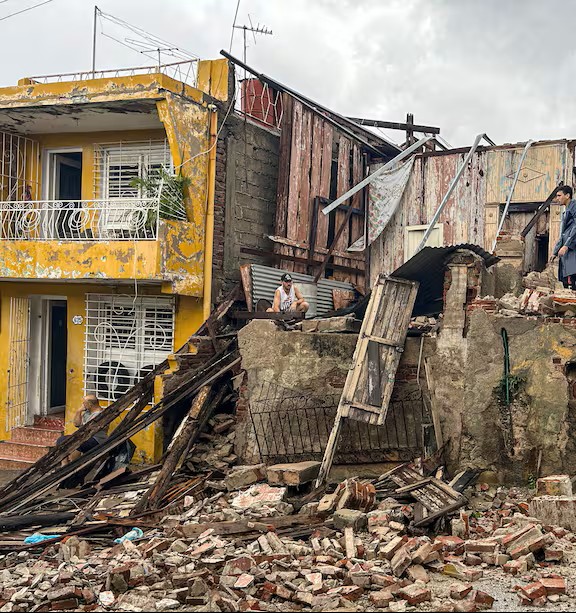
“We are providing care packages to many people, not only our members. Union members in the western parishes have lost roofs and suffered other structural damage to their homes. We have put together teams to temporarily repair roofs and structures so that people have a roof over their heads. We need building materials including tarpaulins,” said Helene Davis-Whyte, general secretary of JALGO. She added, we are also concerned about our retired members who are especially vulnerable at this time”.
“Yesterday I was filled with grief as a member reached out stating that she needed painkiller, underwear, toiletries and hope. We are doing the needs assessment and at the same time preparing packages for distribution. This is the reality right now,” said Tifonie Powell-Williams, JCSA general secretary and PSI Caribbean women’s titular as she spoke in the first few days after the passage of Hurricane Melissa.
Many public services workers at the forefront of rescue, relief and response efforts are now experiencing trauma. So too are their families and the wider population. JALGO and JCSA are organising fun activities for children. PSI’s experiences after the 2010 earthquake in Haïti demonstrated that these types of activities are essential aspects of relief efforts especially for families with children.
Trade union advocacy
PSI’s affiliates in Jamaica were among the first to identify climate change as a key priority for PSI. Subsequently they participated and took the lead in awareness raising and advocacy in the Caribbean on the role of public services trade unions in climate change discussions: from emergency and disaster preparation to response to Build Back Better actions. “Unions will need to demonstrate that first responders and frontline workers show the highest level of professionalism and dedication to saving lives and protecting infrastructure and property, in order to build their credibility for participation in post-emergency decision-making.”
This means that unions should work to ensure participation in all relevant rebuilding decision-making, for example:
Advocate for systematic investment in worker training, safety equipment and tools in order that workers can do their jobs safely and effectively – including in response to future emergencies
Ensure safe staffing levels in all first responder services, including in health care
Establish work rules for local government employees at emergencies, along the lines of those used by firefighters as well as police officers.
Address mental health issues for workers engaged in rescue and reconstruction work (post-traumatic stress disorders)
strengthen work with the communities and ensure all rebuilding programs address the most vulnerable, including women, children, elderly and disabled, and migrants and refugees
Preserve quality public services; invest in public infrastructure, public health systems and other services
Be vigilant to the encroaching of private capital in the rebuilding phase, which may lead to privatization of public services
(from PSI Executive Board Guidelines for Emergency Response 2017)
PSI affiliates in the Caribbean are allies of the Caribbean Climate Justice Alliance. PSI supports the Call to Action by Caribbean civil society for Urgent Action for Climate Justice after Devastating Hurricane Melissa. The Call to governments describes Hurricane Melissa as a “profound manifestation of the deep climate injustice facing our region.” It adds “responsibility lies with countries with high historic and current emissions, with G20 countries collectively making up over 75% of global emissions.” The Call to Action argues that the limited resources and capacity to withstand and recover are because of “historic and contemporary political and economic marginalisation, exploitation and oppression”.
At COP 30 in Belém, Matthew Samuda, Jamaica’s Minister of Water, Environment and Climate Change stated “Jamaicans are resilient, but resilience should not mean enduring the unendurable. Like many small island nations, we are paying the price for a crisis we did not create. Yet, we are not victims of circumstance -- we are agents of action.”
He added, “…solidarity must be more than sympathy. …the developed world bears a profound responsibility to honour and strengthen its commitments to climate finance, recognizing its capacity to mobilize resources at scale. Resilience must be mainstreamed into everything we do.”
As Professor Michael Taylor of the University of the West Indies’ Department of Physics, has repeatedly warned over the past few years, “we can expect the unexpected. Nothing is predictable. That is the essence of climate change.”
Shamir Brown, JALGO, aptly describes the sentiments of all in the country, “Jamaica beaten but not out. We will recover as a people.”
PSI affiliates in Jamaica welcome your support and practical solidarity. Please use the information provided to contact and send funds and provide other support to PSI’s affiliates in Jamaica.