Just Transition Indonesian Unions Push Public Pathway for Just Energy Transition
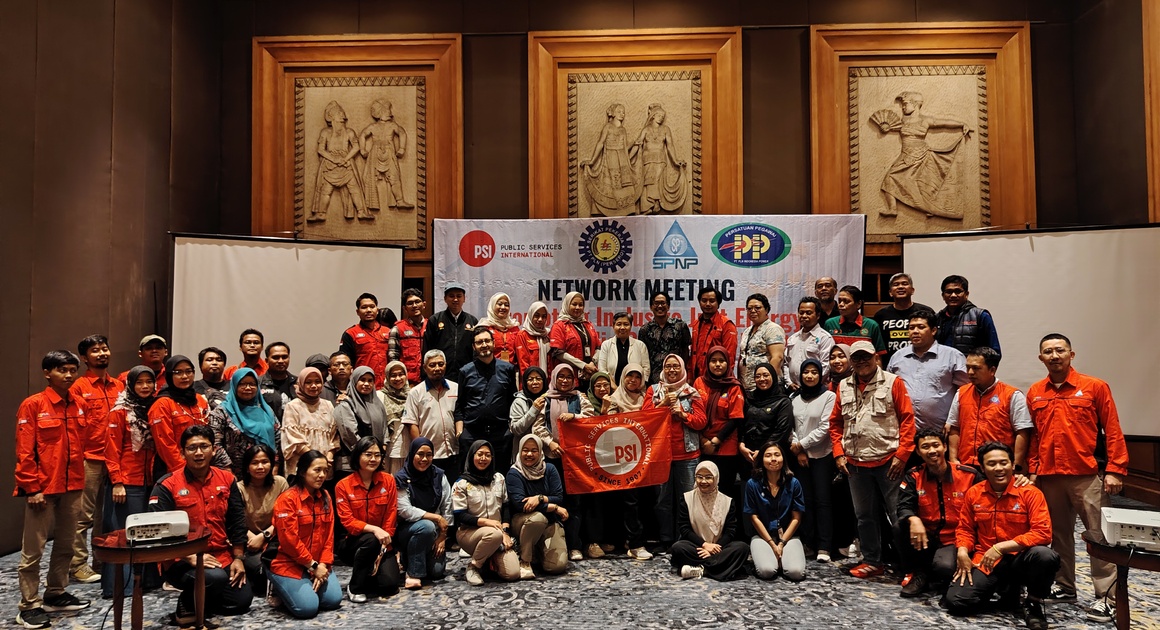
At a meeting in Jakarta, Indonesian unions and allies rejected market-led energy transition models that rely on privatisation, debt and carbon trading. Speakers argued for public financing and democratic control to protect workers, prevent tariff hikes and avoid new inequalities. Unions promoted a “public pathway” rooted in constitutional mandates and social justice.
- Read this in:
- en

Indah Budiarti
Promoting a just and inclusive energy transition was the focus of a network meeting convened by PSI on December 10, 2025, in Jakarta. Around 70 leaders and activists from national centres, federations, unions, and civil society organisations gathered to discuss how Indonesia can pursue an energy transition that is equitable, democratic, and rooted in constitutional obligations. Participants warned that global pressures promoting market-led transition models—often dominated by multinational corporate interests—risk pushing Indonesia towards privatisation, commercialisation, and deeper inequality.
In his opening remarks, Ian Mariano, PSI Sub-Regional Secretary for Southeast Asia, said that Indonesian trade unions have long been at the forefront of defending public services from privatisation. He argued that the struggle is not merely technocratic resistance to policy choices, but a fight to ensure people retain access to safe, affordable, and democratically governed energy. Mariano also stressed that Indonesia has strong grounds to reject transition schemes that rely primarily on private financing, noting that unions have developed alternatives aligned with constitutional principles. “We even have a public energy transition position paper as an alternative to the Just Energy Transition Partnership (JETP). This is part of the strategy to ensure the people maintain sovereignty over energy,” Mariano said.
JETP is a government-led arrangement for energy transition in partnership with the International Partners Group (IPG). IPG is a coalition led by Japan and the United States, along with Canada, Denmark, the European Union, Germany, France, Norway, Italy, and the United Kingdom.
Ian Mariano PSI Southeast Asia
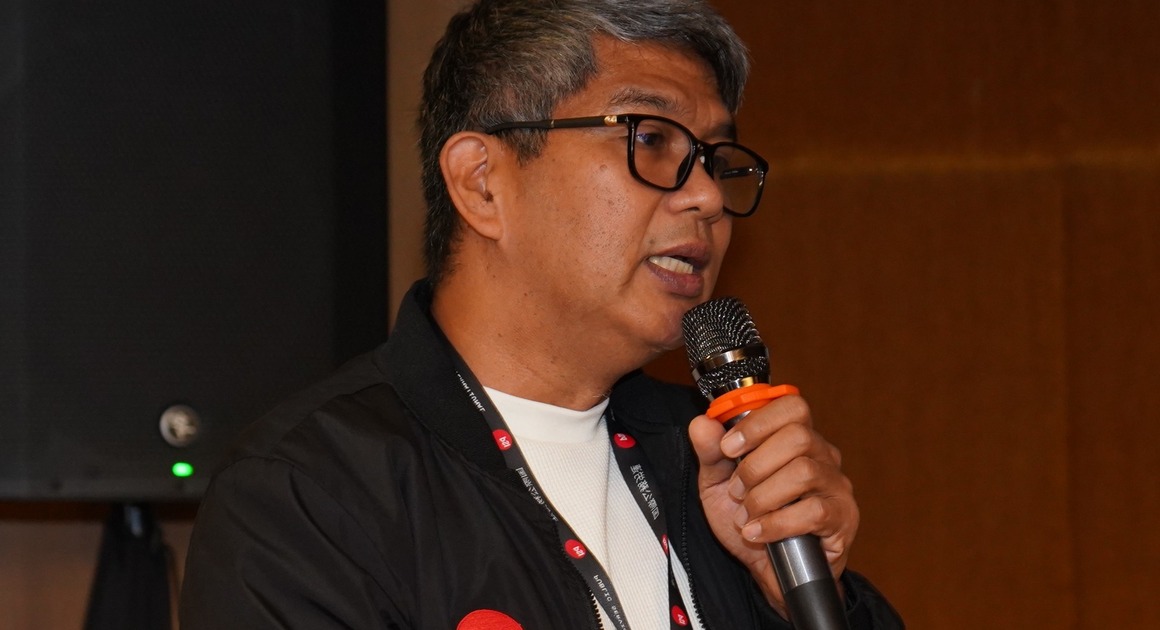
We have a public energy transition position paper as an alternative to the Just Energy Transition Partnership (JETP). This is part of the strategy to ensure the people maintain sovereignty over energy
The first session examined the costs of Indonesia’s energy transition and the politics of financing. Speakers noted that the JETP Secretariat has promoted a narrative that the transition can only be funded through privatisation, deregulation, and a “private sector-friendly environment,” which reduces the state to a market facilitator and treats public financing as unrealistic. In response, unions in the PLN Group presented the “Article 33 Scenario,” challenging the basic assumptions behind JETP, including a projected cost of US$97 billion that, they said, lacks transparency and could be used to justify liberalisation of the energy sector.
Salsabila Aziziah from the Civil Society Coalition for Economic Justice outlined how global markets and international trade shape energy transition pathways. She warned that market liberalisation, carbon trading, and dependence on imported technologies can produce new forms of “energy colonialism” that benefit corporations and wealthier countries, while shrinking space for domestic industry and public welfare. “Without state intervention and a public pathway approach, the transition could become a neoliberal project that widens inequality and excludes vulnerable groups,” she said.
Bhima Yudhistira, Director of Center of Economic and Law Studies (CELIOS), extended this critique by assessing the Danantara scheme and other green financing instruments promoted through JETP. He cautioned that such mechanisms could pull Indonesia into a new debt cycle, and warned that heavy reliance on foreign investment may undermine economic stability and open the door to privatisation. “We must be aware that the energy transition should not become a gateway to new debt. There is an ecological debt of developed countries that has never been paid. It is unfair that they caused the climate crisis, yet they’re charging interest to developing countries through clean energy loan schemes,” Yudhistira added.
Sean Sweeney of Trade Unions for Energy Democracy (TUED) argued that public financing is not only possible, but also more rational for Indonesia. He said market mechanisms—private investment, international debt, and carbon trading—are inherently unstable and driven by profit rather than public need. Public financing, he noted, supports long-term planning, shields PLN from commercialisation pressure, and helps manage the transition without triggering mass layoffs or electricity tariff hikes.
PLN (Perusahaan Listrik Negara) is Indonesia's state-owned electric utility.
Sweeney emphasised that the climate crisis cannot be solved using the same profit-driven mechanisms that helped create it, because that logic conflicts with the mandate to deliver equitable public services.
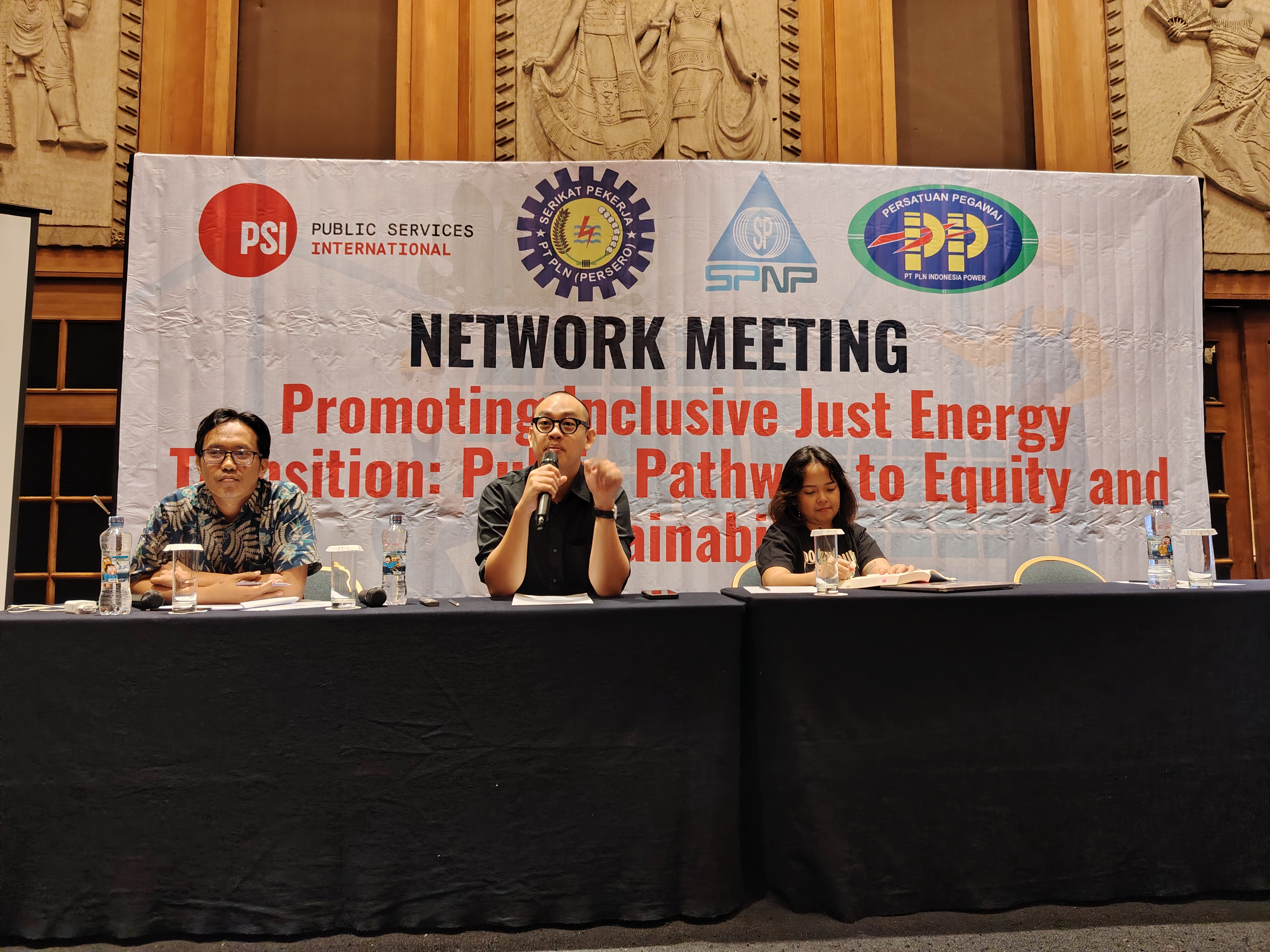
The second session focused on the social dimensions of transition and underscored that clean energy does not automatically mean justice. Sulistiono from Federasi Serikat Pekerja Kimia, Energi dan Pertambangan - SPSI (FSP KEP–SPSI) highlighted the position of mining workers who stand on the front lines of transition impacts. He warned that closing mines without social protection, skills development programmes, and job guarantees could trigger large-scale unemployment. Workers who have supported national energy supply for decades, he said, should not be forced to carry the costs of transition alone.
Tuti Suwartini from FSP FARKES R framed the energy transition as a human rights issue, arguing that energy is a basic right and unequal access is structural injustice. She stressed that women, Indigenous communities, and remote populations are often hit hardest when energy policies are designed without meaningful participation. Without recognising these human rights dimensions, she argued, the transition risks failing its promise of justice.
Irma Rahmawati from SP PLN closed the session by insisting that a public pathway is the only credible route to equitable and high-quality energy services. She said, "PLN’s mandate is to serve the public rather than generate profit. Privatising or breaking up the energy network to follow market logic could deepen regional disparities."
In Rahmawati’s view, only a public approach enables democratic oversight and ensures that every citizen—from major cities to remote areas—enjoys equal rights to energy.
Irma Rahmawati SP PLN
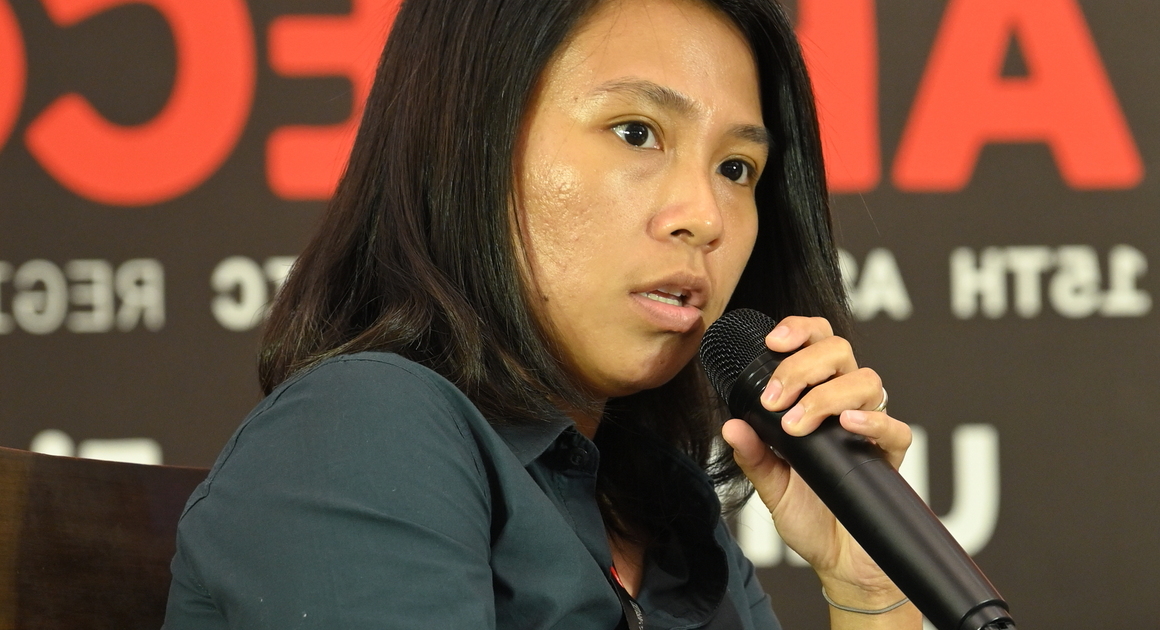
PLN’s mandate is to serve the public rather than generate profit. Privatising or breaking up the energy network to follow market logic could deepen regional disparities.
In closing reflections, Mariano reiterated that the energy transition is fundamentally political. The central question, he said, is not only how to build clean energy, but who controls it—and for whose benefit the transition is pursued.
The meeting concluded with a clear message: Indonesian trade unions are not only rejecting a neoliberal transition model, but advancing an alternative rooted in public ownership, democratic control, people’s sovereignty, and social justice—strengthening the labour movement’s role as a key actor in shaping a more just and sustainable energy future for Indonesia.