Climate and Care Healthcare Workers Are Confronting the Climate Crisis Across Ghana’s Health Facilities
Health workers in Ghana moved from silently enduring heat, floods and snake infestations to organising, documenting and demanding climate-resilient workplaces through union action.

Jesse Saidu
For years, Comfort Adams did what she had always done when the afternoon heat became unbearable at the Chinderi Health Centre in the Oti Region. She wiped her sweat, apologised to patients, and continued with wound dressings, knowing full well that with each drop of sweat, the risk of contamination and infection was high. All these while, she never thought that the climate crisis playing out inside her treatment room was also responsible for this unbearable heat wave.
That session changed everything for Comfort and 228 other healthcare workers across seven facilities. They had been silently bearing the brunt of climate impacts without knowing their suffering had a name, a cause, and more importantly, that they had the power to do something about it.
Video
Ghana's Health Workers Fight Back Against the Climate Crisis
"I used to think climate change was about polar bears and melting ice. Now I know it's about me, my workplace, and my patients."
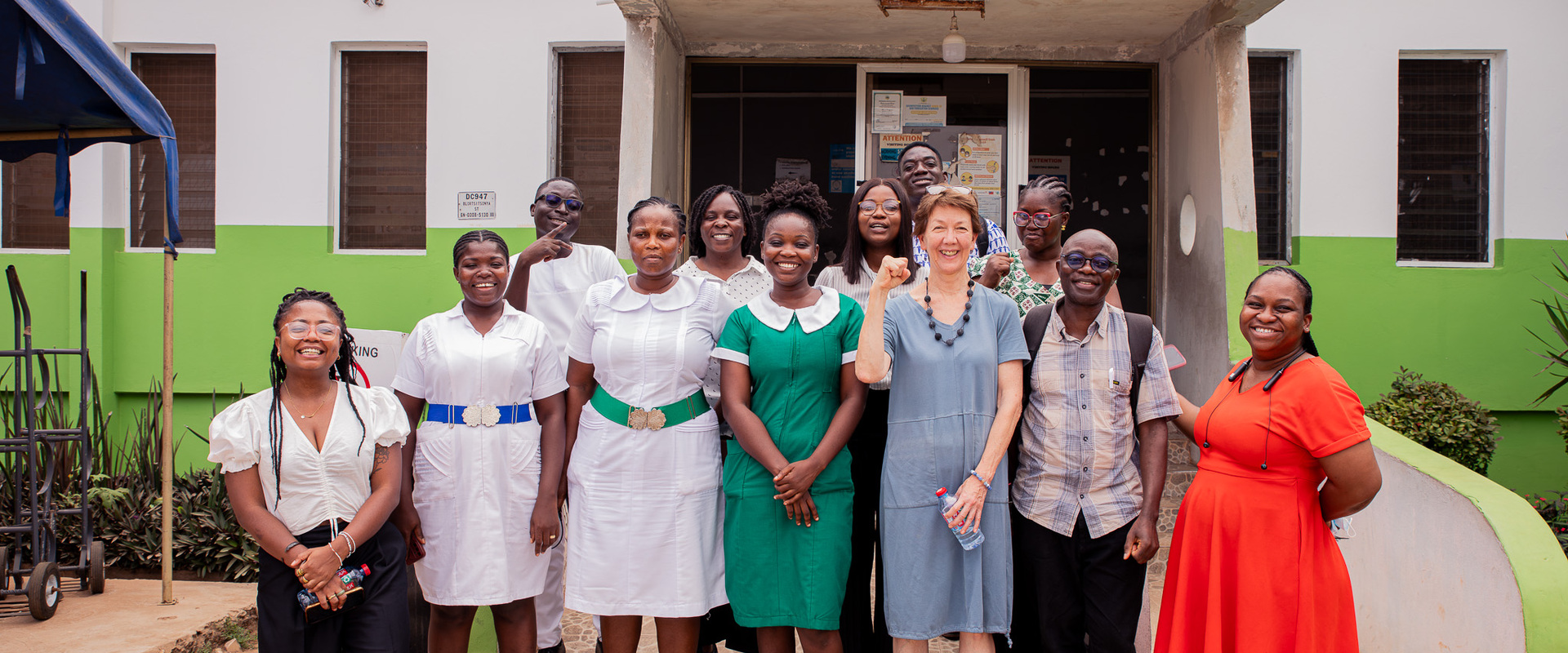
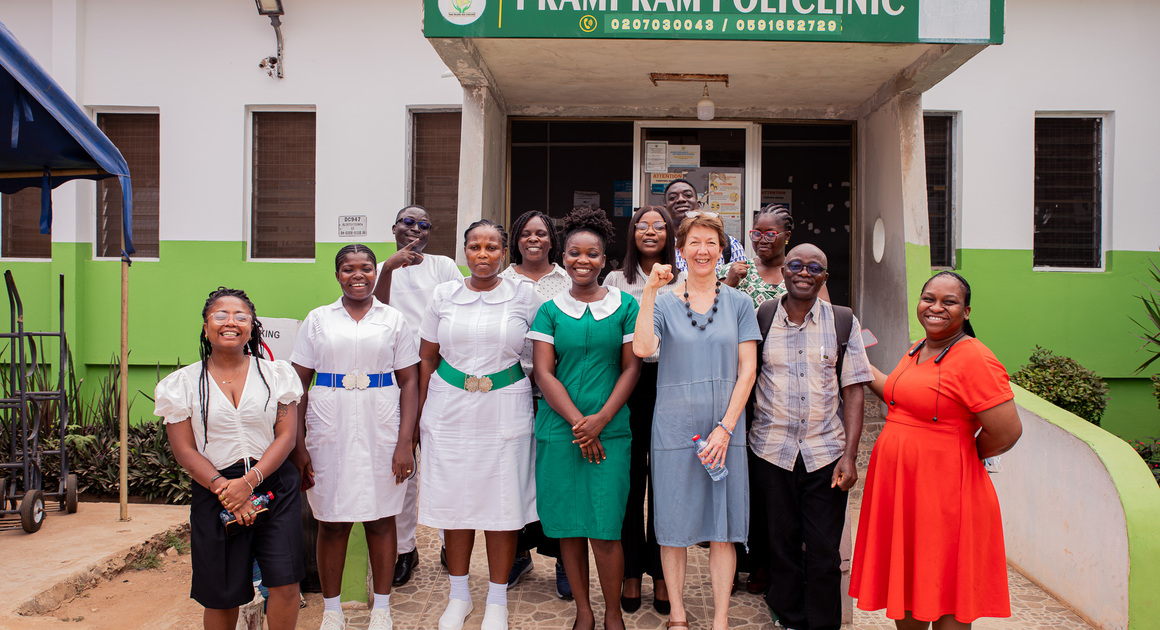
Health workers and PSI staff at the Prampram Polyclinic, Ghana after a project visit.
When the Climate and Care project team arrived at Prampram Polyclinic in Greater Accra, they found workers who had normalised the abnormality. Staff had grown accustomed to leaking roofs and flooded wards.
"Anytime it is about to rain, I become worried because of the state of my unit, I have to stop the caregiving role and pack in," a participant shared.
During the ABL sessions, new information shared with them started shifting some things. Workers stopped simply describing problems and started connecting the dots. The floods destroying things and patient records. The snakes invading their wards after heavy rains. The heat making the wearing of Personal Protective Equipment like nose /face masks unbearable. These weren't isolated inconveniences. They were climate change manifesting inside their workplaces.
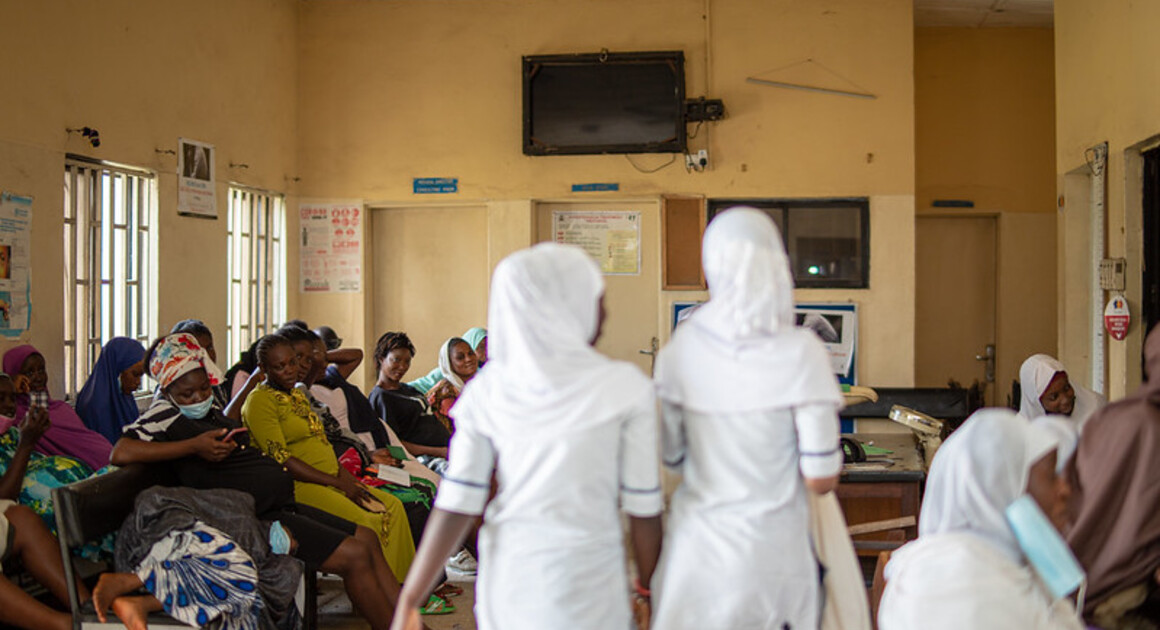
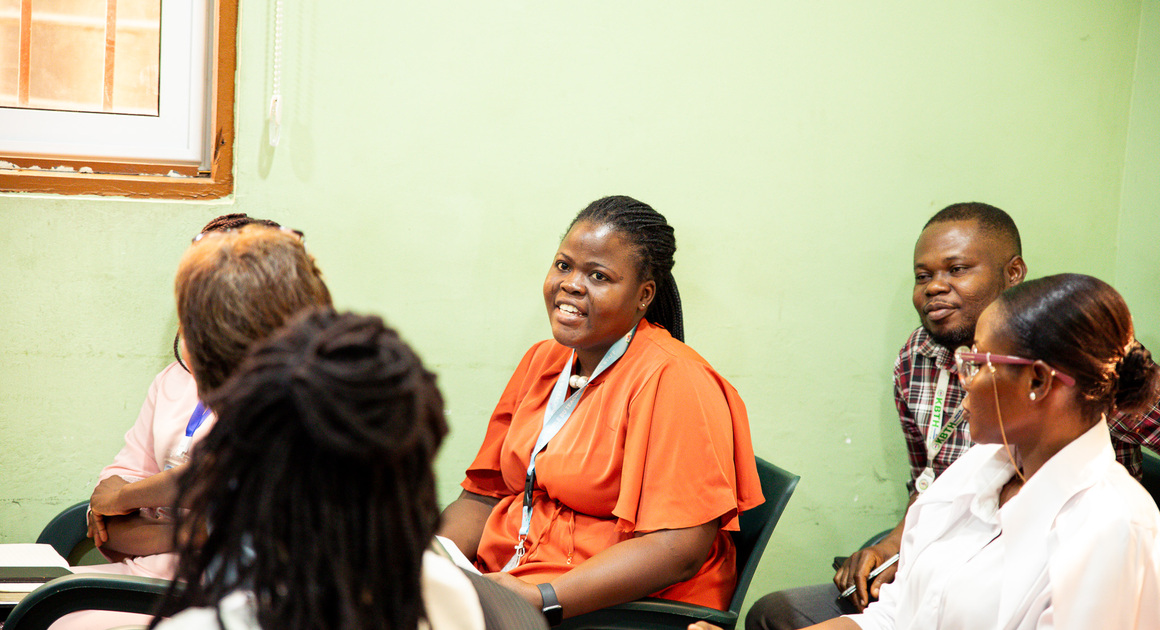
Health worker sharing testimony with the project team at the Korle Bu Teaching Hospital, Ghana Action Based Learning (ABL) Session
The treatment room is not ventilated enough, so anytime the weather is hot and you are performing some procedures like wound dressing and you're sweating, you are tempted to go back and wipe the sweat and go back to the procedure, which is contamination
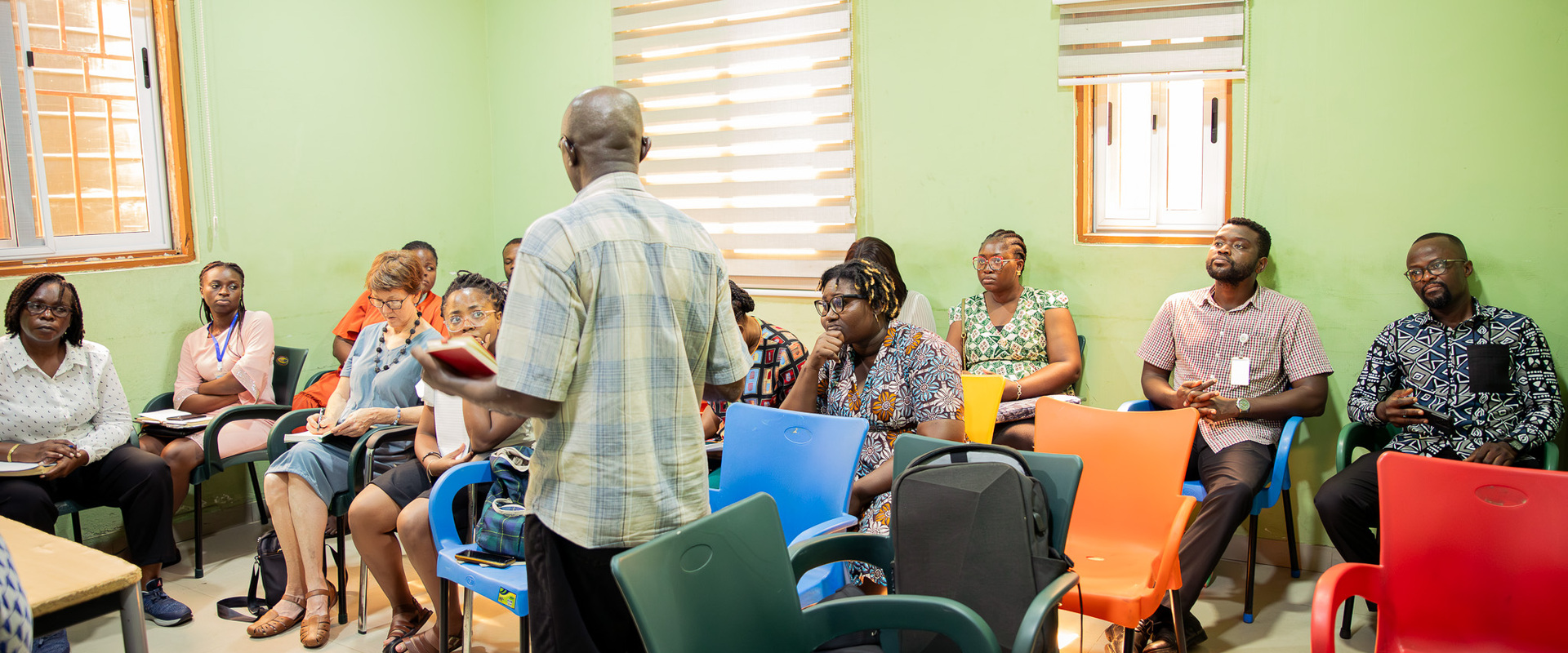
PSI Project Coordinator documenting Workers' testimonies during an ABL Session at the Korle Bu Teaching Hospital, Ghana
At Sandema Municipal Hospital in the Upper East Region, a midwife made the connection:"In relation to the RCH where we provide maternal and child health services, you can imagine a baby has been brought to you to perform postnatal care, and you the healthcare worker attending to this baby is sweating on the child, it is not acceptable."
At Kajaji Health Centre in Bono East, the climate crisis is a full blown nightmare. Workers described a facility overrun by snakes seeking refuge after the area gets flooded. They also reported that one of their colleagues had been bitten. Sometimes we see a lot of snakes in the surroundings. You will be going to the ward and you see snakes. Even the mop buckets, you go to pick it and there is a snake inside. There are snakes all over, so here, it's you and your God," a staff member recounted.
The facility had anti-snake venom but no repellent spray. Workers walked through grass that should have been cleared, wearing regular shoes because the management said there was no money for wellington boots.
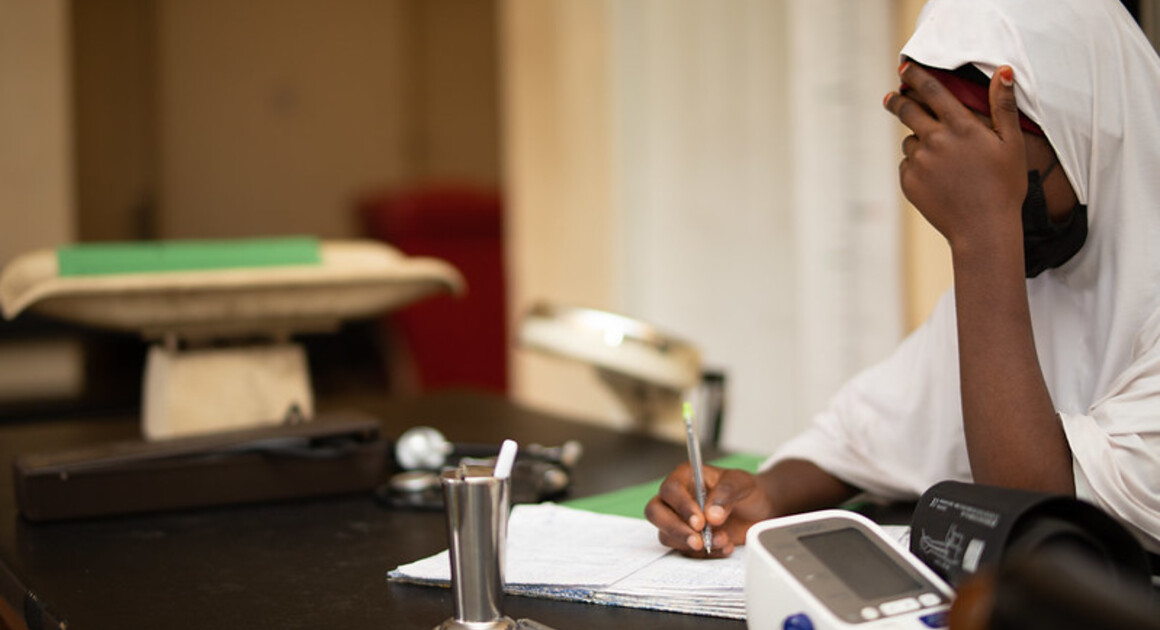
Unfortunately, it is when I am on duty that it floods, this makes me apprehensive and anxious when it's about to rain.
What is Changing?
The workshop helped them see that climate change and workplace exhaustion were connected. And if they were connected, the solutions had to be connected too.
At Nagel Memorial Adventist Hospital in Takoradi, participants stopped simply complaining about flooding and started planning. They developed a contingency plan for relocating patients during floods. They documented how electrical hazards multiplied when water entered the ground floor. "The choked gutters do not allow easy flow of the water when it rains, the water finds its way back into the first floor of the facility and gets the place flooded," they reported. Then they added: "We will engage management and the municipal assembly to desilt the gutters before the next major rains."
At Sandema, workers began demanding something they had never thought to ask for before: solar-powered ventilation. "I will rate management 1 on the scale of 1 to 10," one worker had said during the assessment. "This is because we have to chase them to repair fans. This AC you see in this hall has been spoiled for 4 years, and still not fixed." After the workshop, that same worker helped draft a demand letter asking for a facility-wide climate resilience assessment.
The most unanimous finding across all seven facilities: not a single worker had received formal training on climate-related health challenges before this project.
"This engagement is my first exposure to climate change awareness and its effect on the care giver," echoed a Prampram participant.
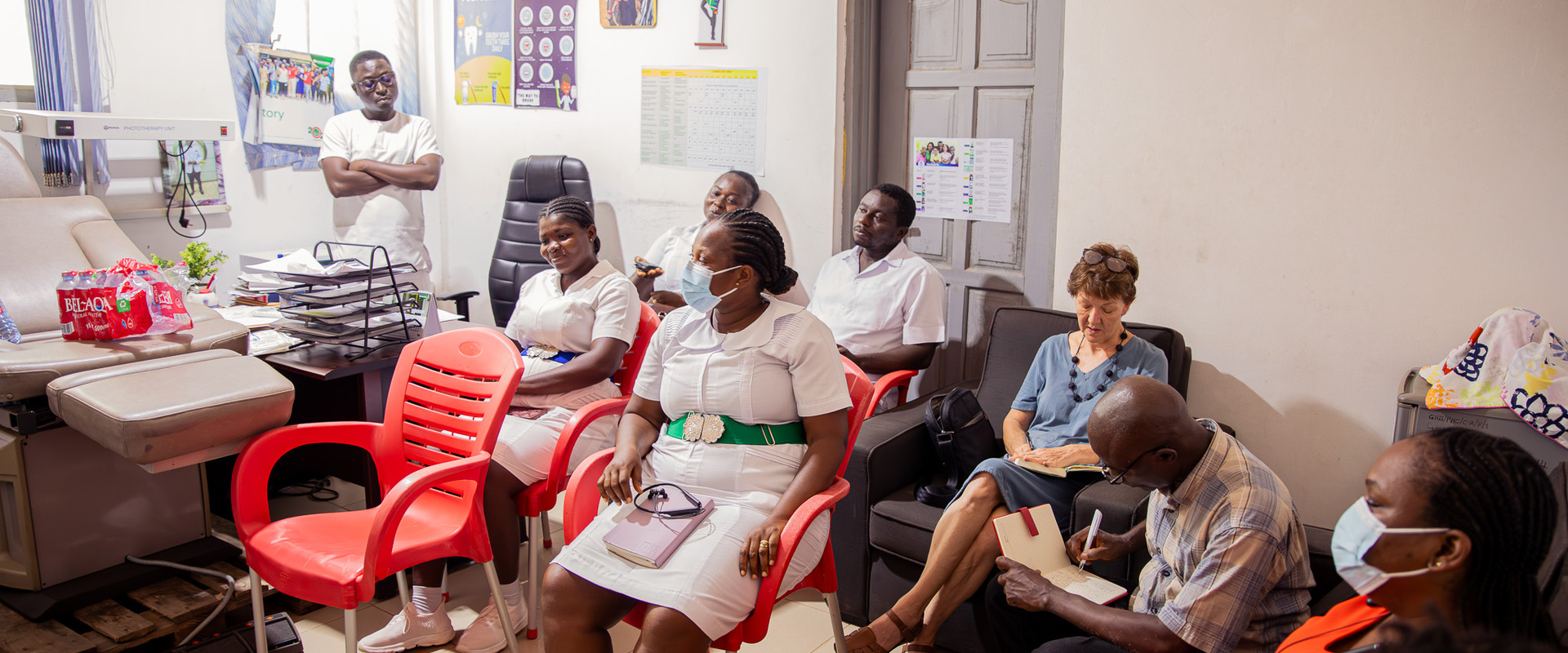
PSI Project Team documenting Workers' testimonies during an ABL Session at the Prampram Polyclinic, Ghana
By the end of the sessions, workers weren't just informed, they were equipped with tools. They knew heat stress wasn't just discomfort but a compensable occupational hazard. They understood snake infestations weren't bad luck but predictable climate impacts requiring preventive measures. They recognised their mental health struggles, the anxiety when clouds formed, the exhaustion from 24-hour shifts when colleagues couldn't commute through floods, are legitimate workplace issues.
Since I was posted to this facility, I have never received any training or orientation on how to handle climate change related problems. We just face the situations as they come,
That worker now chairs her unit's newly formed Climate Watch Committee.
At Margret Marquart Catholic Hospital in Kpando and other facilities, workers had long complained about the lack of drinking water during heat waves. Management always said there was no money. After the workshop, the workers calculated. They showed management how many staff hours were lost to dehydration-related fatigue. They compared the cost of providing water to the cost of reduced productivity. Water was provided within two weeks.
At Chinderi, workers who had been weeding the compound themselves started a logbook. Every time they used personal funds for facility maintenance, they recorded it. Every request ignored by management, they documented. They began building a case for ongoing advocacy.
The most significant shift is happening at the bargaining table. Union representatives who participated are now integrating climate language into collective bargaining agreements. At the post-project meeting between GRNMA, HSWU, and the PSI project coordinator, the conversation had moved beyond documenting problems to demanding structural changes. Workers want climate protection clauses, hazard allowances that reflect flood risks, transport provisions for staff stranded by extreme weather, and mental health support.
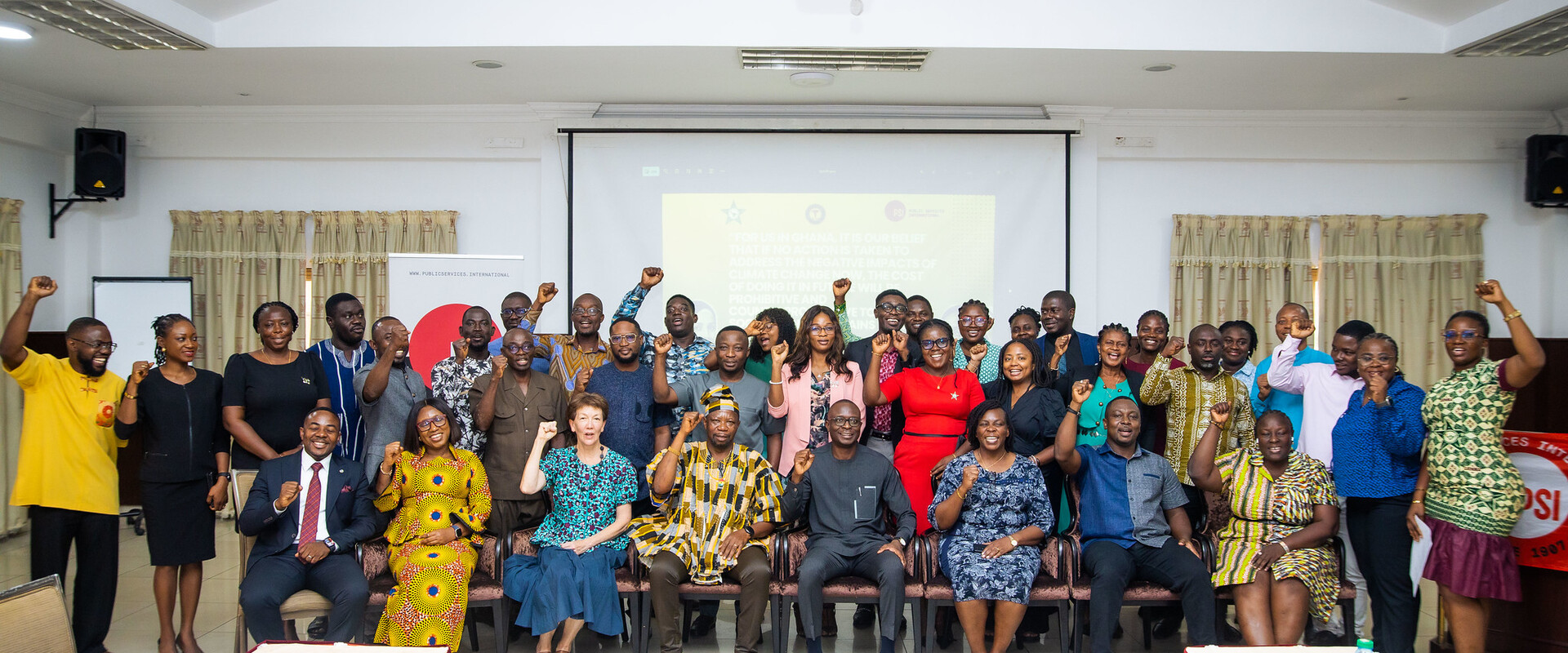
Participants at the Stakeholders' Dialogue on Climate and Care Workers in Accra, Ghana
The seven facilities now have something they lacked months ago: organised workers who see climate resilience as their fight. They still face leaking roofs, snake-infested compounds, flooded wards, and managers who say there's no money. But they no longer face these challenges in silence. They document. They are organising and demanding for administrative and legislative reforms to these problems.
The Ministry of Health representative committed to forward the dialogue’s recommendations to senior management for integration into ongoing sector planning, while the Environmental Protection Agency committed to pushing for the recognition of health workers as a vulnerable group in national adaptation frameworks. All parties agreed to sustain the multi-stakeholder platform, pursue coordinated inter-ministerial action, and demand for dedicated budget allocations to strengthen enforcement of occupational safety standards, and timely compensation for affected workers.
This is part of the project: Supporting Health and Care Workers for Climate Resilience in Ghana, implemented by GRNMA and HSWU, and funded by Fundación Avina