Statement Global Unions Call for a Permanent and Sustainable Ceasefire in the Middle East
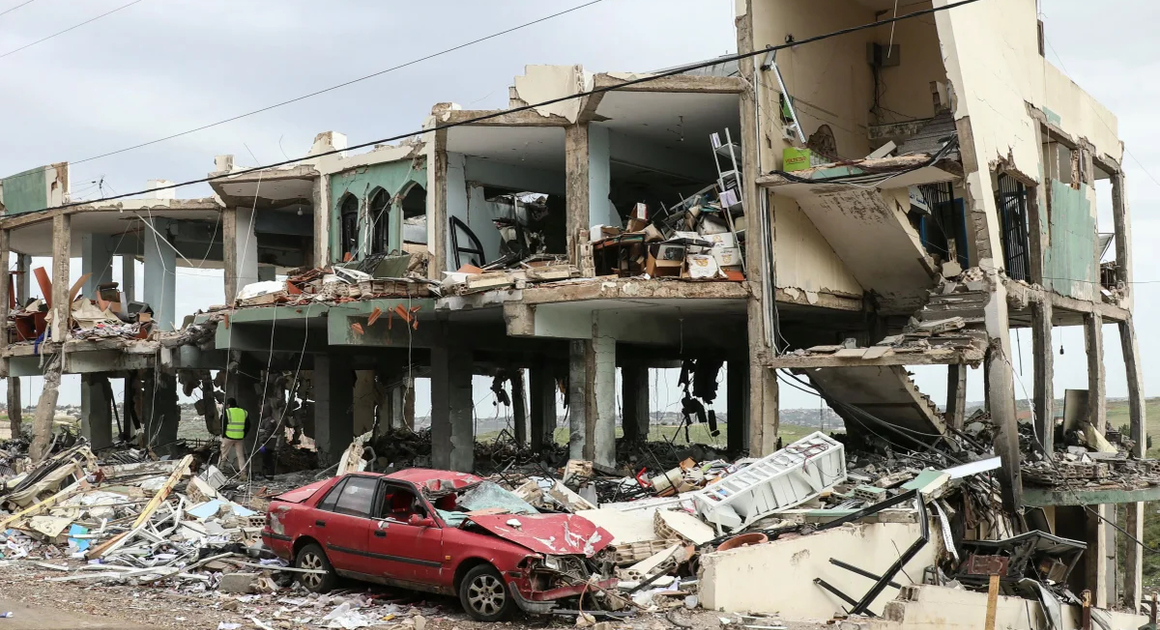

We lament that the recent negotiations in Islamabad during the two‑week ceasefire between the United States of America, Israel and Iran ended without a viable peace deal. This ceasefire must be made permanent, must lead to full de‑escalation, and must explicitly include Lebanon, where ongoing Israeli military assaults against Iran supported Hezbollah, have already produced a catastrophic humanitarian crisis also affecting the lives and livelihoods of ordinary Lebanese citizens. Lebanon continues to bear a heavy human and social cost of the conflict. Civilians face ongoing attacks, displacement, and the destruction of critical infrastructure, including schools and hospitals. Lebanon must not be treated as a secondary theatre of war; any serious path to peace must include an end to the attacks devastating the country and its citizens.
The closure of the Strait of Hormuz has triggered severe humanitarian and economic shocks across the region, disrupting oil, gas and fertiliser exports and supply chains, exacerbating already strained food security, as the conflict spills into neighbouring countries and pushes already fragile economies into further fiscal crisis with severe consequences for people’s livelihoods and access to basic needs. This is putting thousands of jobs at risk, leaving workers exposed to sudden income loss and being left without protections.
Unfortunately, one of the defining features of this war is the targeting of energy, oil, gas and petrochemical facilities in a region that relies heavily on these industries for its economy. Workers in these sectors are being killed or injured while carrying out their duties at their workplaces while the commodities themselves are used as leverage on both sides of the conflict.
While global attention focuses on rising oil prices, civilian seafarers have been killed and injured, and vessels remain under threat of being targeted. More than 20,000 seafarers remain trapped in the Strait of Hormuz, living in constant fear and uncertainty – innocent civilian workers who are effectively on the front line, their lives on the line every day.
With over 30 million migrant workers across the region, many are among the hardest hit, sustaining key sectors while facing heightened risks to their safety, job loss, unpaid wages, and barriers to evacuation. Their safety, rights, and access to wages must be guaranteed without delay.
Workers, civilians, and public institutions must never be targets of military operations. The killing and injuring of workers across all sectors, including those in education, healthcare, journalism and media, transport and other essential services, as well as the destruction of protected spaces such as schools and hospitals, are profound violations of international law and an assault on human dignity. Such acts are intolerable and must be unequivocally condemned.
The global trade union movement rejects the logic of war and militarisation. Military force does not bring security - it entrenches violence, fuels instability, deepens injustice, and undermines the foundations of peace, democracy, human rights and multilateral cooperation. Diplomacy, not bombs; dialogue, not destruction, remain the only legitimate path to lasting peace.
As unions representing over 200 million workers across sectors and continents, we call on the international community to:
Reject war, respect international law and condemn the use of military force by all parties;
Transform the current ceasefire into a permanent and sustainable end to the hostilities, including full de‑escalation;
Protect civilians and safeguard essential services and infrastructure, ensuring access to healthcare, education, transport, workplaces, water, and food, in full compliance with international law;
Ensure the protection of migrant workers, seafarers, refugees, and all workers in precarious situations, including safe evacuation where necessary, as well as access to wages, healthcare, shelter, and communication;
Uphold human and labour rights, guarantee accountability for violations of international humanitarian and human rights law, and protect freedom of association, trade union activity, and democratic civic space during conflict and crisis.
We reaffirm our unwavering commitment to a world in which conflicts are resolved through diplomacy rather than violence, where multilateralism is strengthened, and where all people have the right to live and work in safety, dignity, democracy, and peace. War is a political choice. But peace is the only answer.
Signatories:
David Edwards, General Secretary, Education International
Atle Høie, General Secretary, IndustriALL Global Union
Luc Triangle, General Secretary, International Trade Union Confederation
Christy Hoffman, General Secretary, UNI Global Union
Steve Cotton, General Secretary, International Transport Workers’ Federation
Ambet Yuson, General Secretary, Building and Wood Workers International
Adriana Paz Ramírez, General Secretary, International Domestic Workers Federation
Daniel Bertossa, General Secretary, Public Services International
Kristjan Bragason, General Secretary, International Union of Food, Agricultural, Hotel, Restaurant, Catering, Tobacco and Allied Workers’ Associations
Veronica Nilsson, General Secretary, Trade Union Advisory Committee to the OECD
Anthony Bellanger, General Secretary, International Federation of Journalists