in Ghana AFRECON 25: Enhancing Social Dialogue in Solid Waste Management
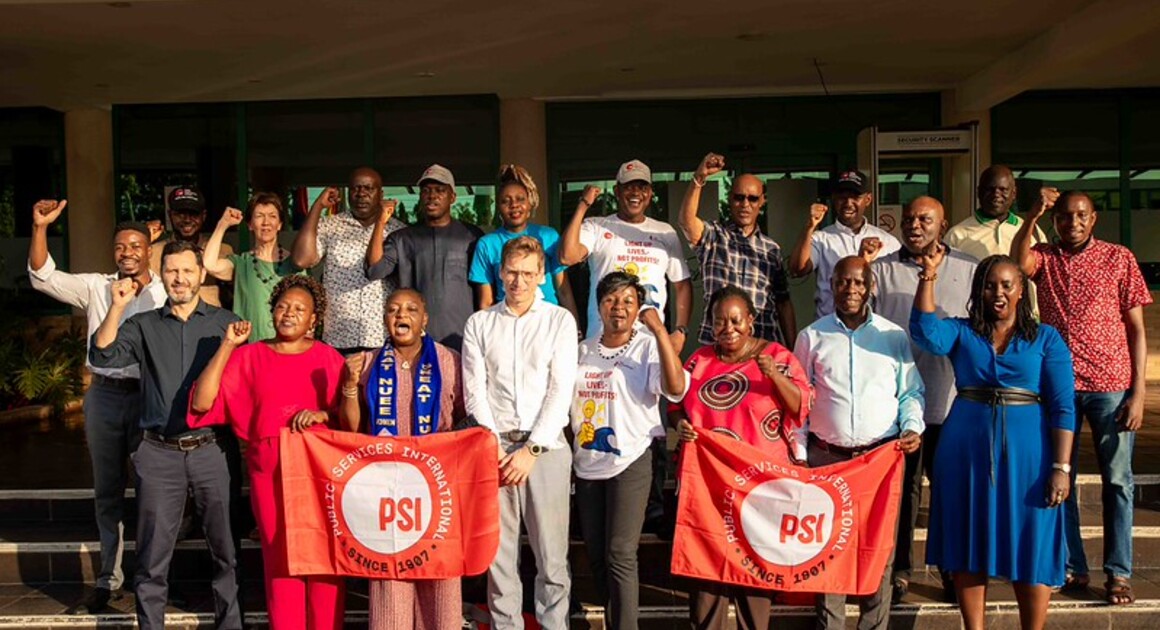
The session examined how social dialogue and collective bargaining can improve solid waste management and secure decent work for waste workers, amid underfunding, privatisation, unsafe conditions and weak institutional support. Unions shared efforts to formalise jobs, strengthen health and safety, organise private-sector workers and push for stronger bargaining frameworks and re-municipalisation of services.
- Read this in:
- en

Jesse Saidu
Enhancing Social Dialogue in Solid Waste Management
The session focused on using social dialogue and collective bargaining to improve solid waste management services in municipalities across the continent, and to ensure decent work for those that carry out the vastly underrated work of keeping cities and municipalities clean.
In this meeting we heard from many countries – including those from Tanzania, Kenya, Uganda, Nigeria, Morocco and Senegal.
Meeting noted that:
Solid waste management is a sector that faces major challenges with vast amounts of uncollected waste in municipalities across the continent clogging up water ways and streets, causing air and water pollution and contributing significantly to the emission of greenhouse gasses and hence climate change.
Often the reason that municipalities feel pushed into a situation of contracting out waste services is because of the limited budget that municipalities have for waste management services. Tax justice and increasing the budget for public services is thus a vital part of delivering solid waste management services.
In general, it is a very understaffed sector – with too few workers engaged in the collection, transfer and disposal of waste.
In most countries, the vast majority of workers who collect and dispose of waste are employed by the private sector, or work as volunteers. Often municipally employed staff play a more supervisory role for privately run waste collection, transfer and disposal as is the case, for example in Tanzania.
Trade unions from Tanzania, Kenya, Uganda, Nigeria, Morocco and Senegal have started engaging with and organizing waste workers who work for private contractors, often under terrible working conditions – facing extremely hazardous working conditions, exposed to hazardous material, with inadequate protective equipment. They are generally poorly paid and have no benefits.
Trade unions are working to improve the working conditions of these workers by, among other actions, engaging the private employers. For example in Tanzania where workers who were working on day-to-day contracts now have formal contracts of employment. In Uganda, the union has been assisting workers to get proper PPEs, and to formalise the employment of casualised and short-term contract workers. In Kenya, the union has managed to ensure that 4000 waste pickers who were on short term contracts now have permanent jobs.
In many cases, trade unions are also organising these private sector workers into their unions.
The mix of public and private operating in the sector makes it a complex situation which divides workers – bringing these workers into the same union is an important step in overcoming these divisions and uniting workers around common objectives.
This is also an important first step to bringing solid waste management services back in-house through a process of re-municipalisation
Our ability to achieve genuine social dialogue and agreements is constantly blocked by institutional and political forces. Lack of trust between government / employers and unions caused by political interference and broken agreements prevents sustained, long-term social dialogue required to implement complex systems like re-municipalisation.
Recommendations
Trade unions must continue to engage both public and private employers about formalising the contracts of waste workers, and ensuring that they have permanent, decent jobs.
Trade unions must campaign for waste workers to be treated with dignity and respect under decent conditions
There must be a strong focus on the occupational health and safety of waste workers – ensuring they have a full set of proper PPEs, that measures are taken to protect them from the hazardous material they handle, and from the harsh climate and heat that they work under.
Collective Bargaining Framework for solid waste management workers must be strengthened, regardless of employment status
We must develop a model CB agreement which models how to best protect waste management workers given the specific conditions that they work under and ensure decent work.
Gender equity in the sector must be strengthened
Social dialogue at the local level must be institutionalised – it is the bridge between improved service delivery and improved working conditions. It is important that we approach it in a politically strategic way.
Trade unions must continue to organise solid waste management workers into their ranks, regardless of whether they are in the public or private sector.
Strengthening the position of all waste workers, organizing them into the unions, and engaging employers are all vital steps towards the re-municipalisation of solid waste management – bringing this service back into the public sector
Trade unions must continue to explore possibilities for and agitate for the re-municipalisation of solid waste management services