AFRECON 2025 Empowering Education Support Personnel in Africa and MENA
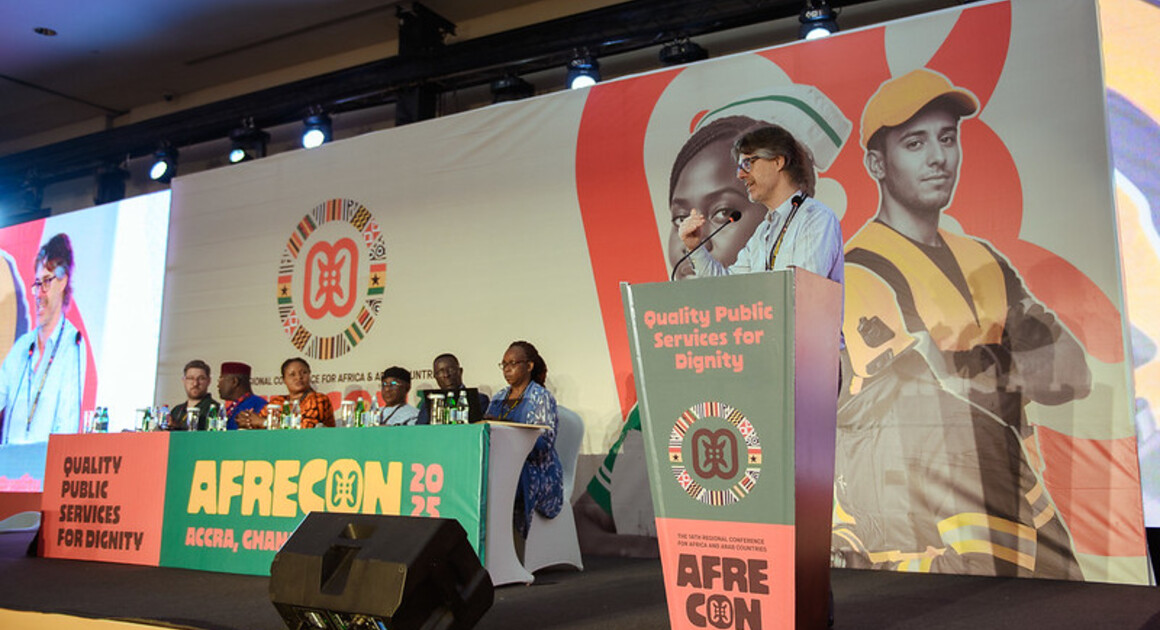
The side event called for education support personnel to be recognised as essential workers in public education, with fair pay, career progression, inclusion in policy processes, and protection from austerity, privatisation and workplace discrimination. Union leaders agreed to strengthen organising, promote unity between teaching and non-teaching staff, advance gender justice and GBV protections, and deepen Africa–Arab solidarity to secure dignity and decent work for all education workers.
- Read this in:
- en

Jesse Saidu
AFRECON 2025 Side Event – Empowering Education Support Personnel in Africa and MENA
This side event brought visibility to the often-invisible workforce that sustains education systems across Africa and the Arab region. Discussions highlighted systemic neglect, structural injustice, and the urgent need to reframe Education Support Personnel (ESP) as essential contributors to quality public education.
1. The Invisibility and Misclassification of Education Support Workers
Across the region, Education Support Personnels, cleaners, security workers, librarians, ICT staff, cooks, bursars, lab technicians and more, remain classified as “support staff providing a connotation of being second-class” staff. This nomenclature reinforces inequality and diminishes their professional value.
Key concerns included:
Workload intensification
Casualisation of work
Lack of career progression
Exclusion from professional development and policy processes
2. Global and National Pressures Undermining Education Support Workers
Speakers highlighted the dual pressures of global austerity and domestic policy failures. IMF-driven wage ceilings, recruitment bans, and shrinking public budgets have left Education Support Workers understaffed, underpaid, and undervalued.
Common challenges raised:
Delayed recruitment and wage bill ceilings
Outsourcing of core public education functions
Low budget allocations and corruption
Divide-and-rule strategies fragmenting workers by job category
3. Organising Within a Fragmented Sector
Union leaders emphasised unity between teaching and non-teaching staff. Fragmented unions weaken collective bargaining power.
Key strategies:
Negotiating budget-backed CBAs
Building alliances across education levels
Strengthening cross-border learning and solidarity
Including Education Support Workers in policy formulation and reforms
4. Gender, Care Work & Social Justice Dimensions
Women Education Support Workers bear disproportionate burdens of unpaid care work and face workplace discrimination, job insecurity, and heightened risks of GBV.
Priorities identified:
Integrating GBV prevention into CBAs
Recognising care work as a labour rights issue
Supporting both workplace and domestic violence survivors
5. Regional Perspectives: Africa–Arab Synergies
Shared experiences across regions included:
Lack of strike rights and union repression in some Arab states
Poor working conditions and limited rights recognition
Proliferation of unregulated private schools
Lack of adult education and literacy programmes
Delegates called for deeper Africa–Arab exchanges, benchmarking, and coordinated union action.
Core Takeaways & Recommendations
The following regional priorities emerged:
1. Redefine and elevate ESP identity
Replace discriminatory nomenclature and integrate ESP concerns into education and labour reforms.
2. Challenge austerity and privatisation
Demand increased public financing and resistance to outsourcing.
3. Strengthen organising and solidarity
Build unity between teaching and non-teaching staff and enhance PSI solidarity missions.
4. Advocate for fair remuneration and career progression
Ensure CBAs provide clear, budgeted gains and equal pay for equal value.
5. Address GBV, care work, and discrimination
Adopt gender-responsive policies and protections.
6. Integrate ESP struggles into PSI’s regional and global agenda
Amplify ESP voices in all PSI campaigns.
Closing Reflection
The session affirmed that Education Support Workers are the backbone of public education, and reclaiming dignity requires organising power, policy engagement, and cross-regional solidarity. The outcomes from this side event will inform PSI’s ongoing advocacy to ensure that every education worker is recognised, protected, and valued.