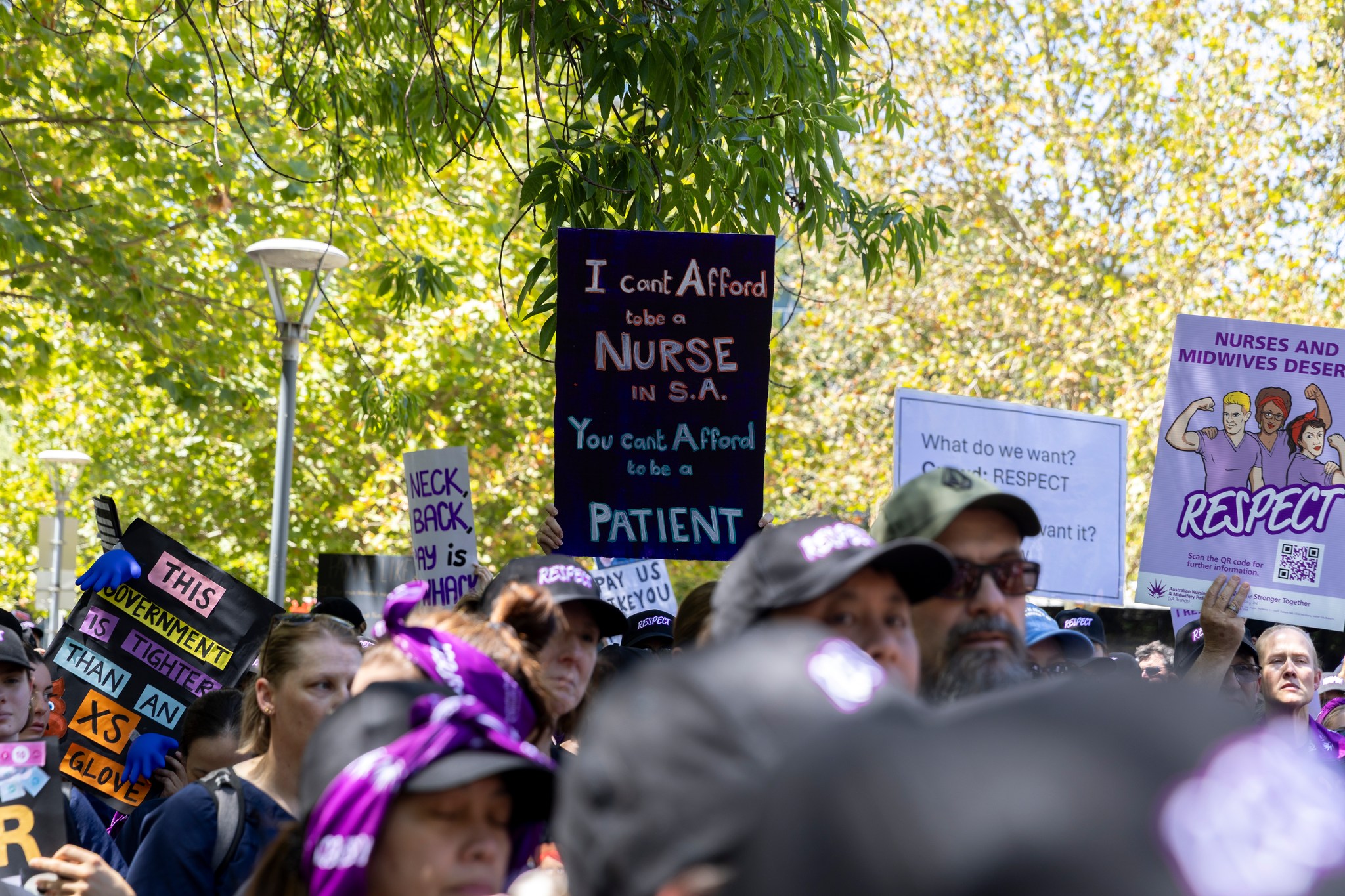
Fighting back Australian Nurses and Midwives Stage 7,000-Strong Rally After 111 Days of Industrial Action
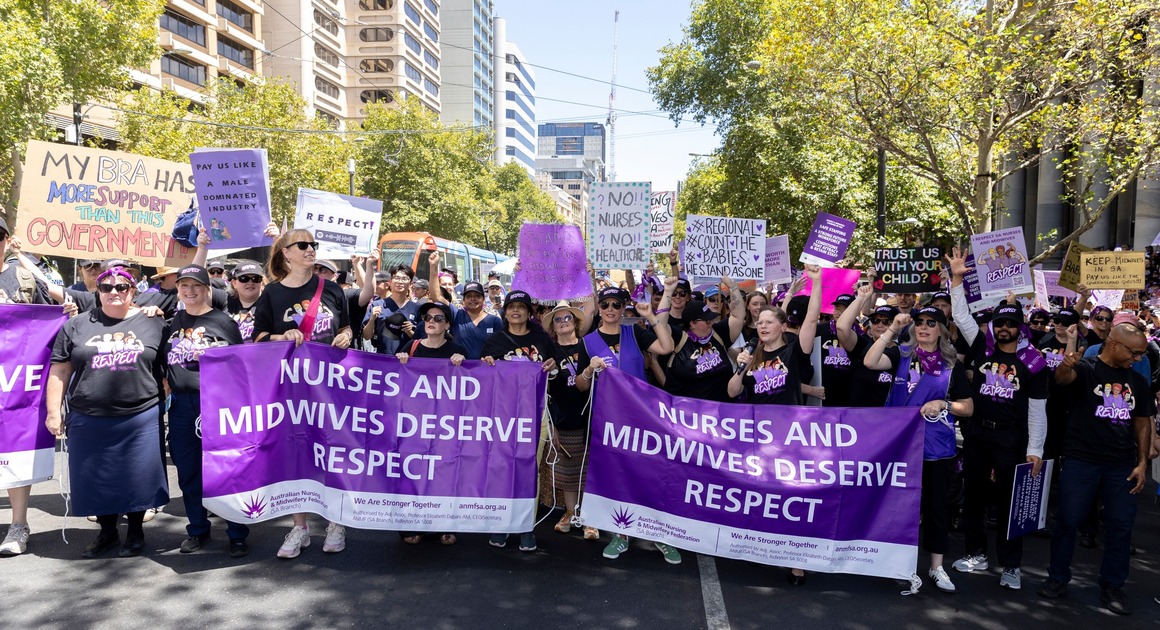
The Australian Nursing and Midwifery Federation South Australia Branch (ANMFSA)has mobilized thousands of nurses and midwives in an unprecedented campaign for better wages and conditions. After rejecting three inadequate offers from the government, members staged one of the largest rallies in the state's history with over 7,000 participants demanding fair compensation.

Jyotsna Singh
On February 5, 2026, nearly 7000 nurses and midwives in South Australia took out a rally asking for fair wages. It is believed that it was one of the biggest rallies the state has seen in decades. ANMFSA’s total membership is 16,000. Accounting for nurses and midwives who had to remain at their posts to ensure patient safety, the turnout represented an extraordinary level of engagement and solidarity.
"We believe the key to the successful rally was dedicated organisng by the Union. The issues were widely and deeply felt. We ensured from the beginning that people were involved in the process and felt ownership, therefore they are prepared to fight strongly," said ANMF SA.
Negotiations for a new South Australian public sector nursing and midwifery agreement officially began in March 2025, but the groundwork for the campaign started a full year earlier. The ANMF SA Branch took an inclusive approach to developing the log of claims, determined that members would feel genuine ownership of their demands rather than viewing them as directives from union leadership.
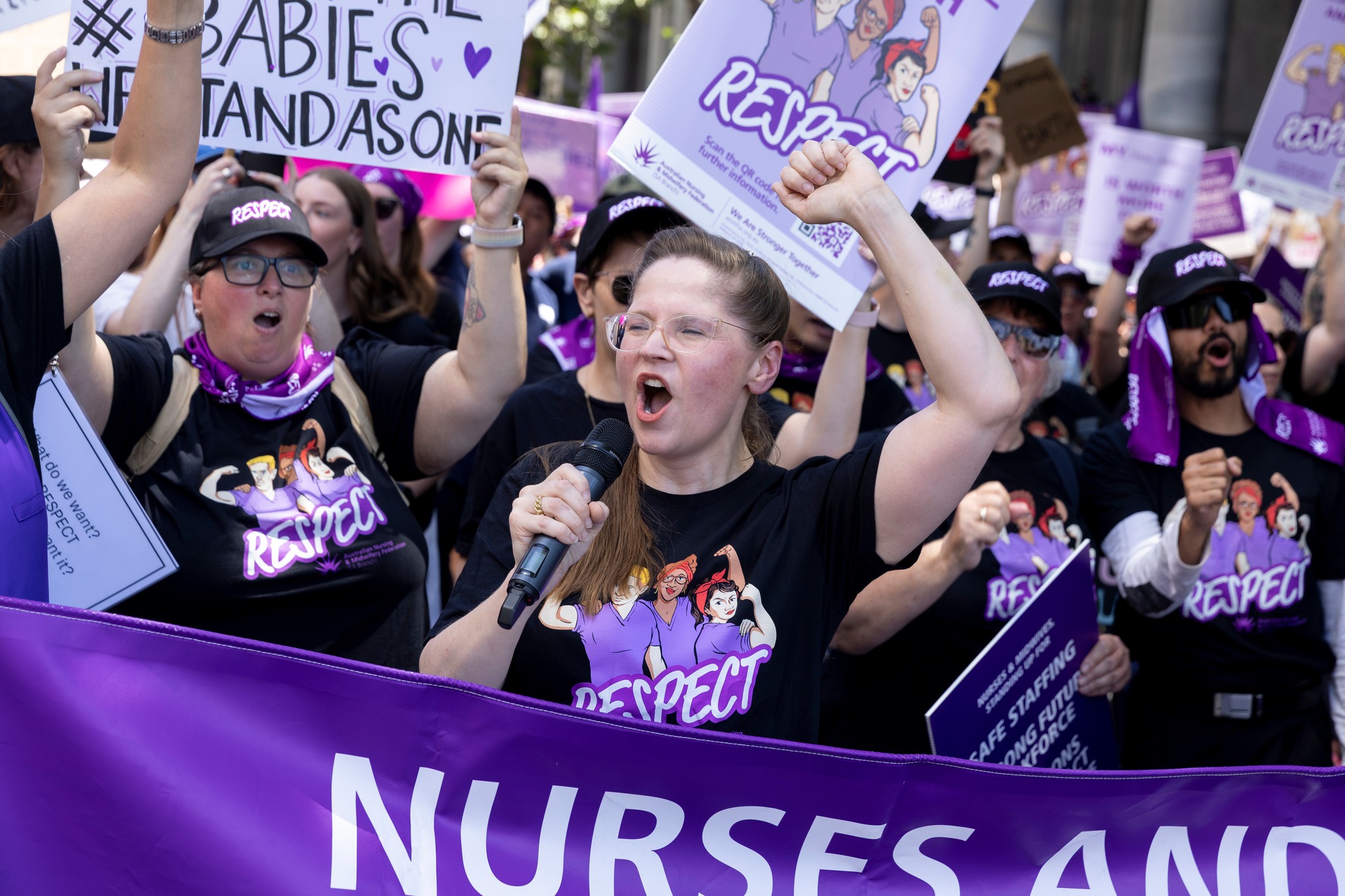
Throughout that preparatory year, the Enterprise Bargaining (EB) team travelled across South Australia, visiting every healthcare site in the state. The visits were extensively publicised, ensuring maximum member participation. The strategy proved successful—members felt heard and were vocal in their appreciation of the union's commitment to genuine consultation.
Among the Lowest Paid in the Country
Nurses and midwives in South Australia are among the lowest paid in the country, with most categories matching only New South Wales salaries—a state currently in arbitration seeking better pay conditions. By the end of 2027, SA nurses and midwives will be approximately 23-27% behind their counterparts in most other states.
This significant pay gap poses a serious threat to South Australia's healthcare workforce, as many nurses and midwives are expected to relocate to eastern states for better compensation and working conditions.
The government has presented three different offers throughout the negotiations, all substantially similar and offering members no more than an 11% increase. The membership has overwhelmingly voted to reject each proposal.

Industrial action commenced 111 days (three-and-a-half months) ago with low-level measures including wearing campaign t-shirts and holding stop work meetings. In November, the union organised a demonstration on the steps of parliament that drew over 4,000 members.
By Christmas, with no improved offer forthcoming, the union made the decision to escalate actions. Members began stopping all non-nursing duties that nurses typically absorb when the system is under pressure, including making beds and collecting data for billing purposes.
Then February saw the big rally.
The Fight Continues
Despite the historic show of solidarity and sustained industrial action spanning nearly four months, negotiations remain at an impasse. The union and its members remain committed to securing fair compensation that reflects the critical importance of nursing and midwifery work and prevents the exodus of healthcare professionals to better-paying states.
The SA nursing and midwifery campaign demonstrates the power of member-driven organising and the willingness of healthcare workers to take collective action when their concerns are systematically ignored. As one organiser noted: "The fight is not over yet!"
"The South Australian nurses' campaign exemplifies member-driven organising at its best. When workers feel genuine ownership of their demands and stand together, they create the solidarity needed to challenge inadequate compensation and win respect at work," said Tom Reddington, PSI’s Sub-regional secretary for Oceania.